Structural Misalignment in Healthcare GPOs

Bar Chart Graphic
Executive Summary

Group Purchasing Organizations occupy a central and largely unquestioned position in the healthcare procurement ecosystem. Nearly every hospital in the United States participates in at least one GPO, and the strategy seems straightforward: aggregate purchasing volume, negotiate from scale, reduce sourcing overhead and secure pricing that standalone institutions cannot achieve on their own. 

That value proposition seems obvious; GPOs provide contract access, pricing benchmarks, administrative efficiency and scale leverage that many organizations would struggle to replicate independently. The question is not whether they add value – the question is whether their economic structure is fully aligned with the financial objectives of the hospitals they serve. 

It is not. 

GPOs are funded primarily through administrative fees paid by vendors as a percentage of purchase volume, an arrangement permitted under federal safe harbor regulations. A GPO whose revenue scales directly with total spend cannot be perfectly aligned with aggressive enterprise-wide cost reduction objectives. Compliance frameworks limit the pursuit of lower-cost alternatives, local negotiating gains are often offset in part by GPO fee structures, and some of the most powerful cost levers, utilization management, standardization, make vs. buy, revenue enhancement and strategic partnerships fall largely outside GPO influence. 

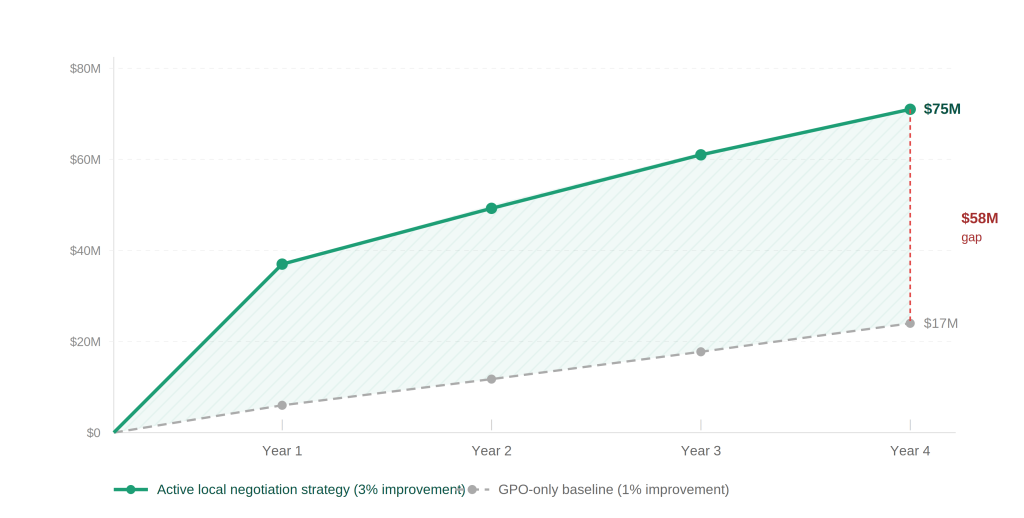
For a health system carrying $1 billion in annual non-labor spend, a one percent improvement in total economics represents $10 million in margin impact. At three percent, that figure rises to $30 million. For organizations operating on thin margins, those are not rounding errors, they are the difference between financial stability and uncertainty. 

This paper examines where GPO incentives diverge from hospital interests, quantifies the financial stakes for executive leadership, and offers a framework for using GPO relationships strategically in a broader cost management strategy rather than relying on them to drive financial improvement goals. 

The Historical Evolution of Group Purchasing Organizations 

Group Purchasing Organizations began in the early twentieth century as cooperative buying arrangements among hospitals operating in fragmented markets. Individual institutions lacked scale and procurement sophistication, suppliers often dictated pricing, and administrative resources were limited. By pooling demand, hospitals gained leverage, reduced overhead, and secured better terms. 

The modern GPO industry took shape in the 1980s when two forces converged. Reimbursement pressure intensified following Medicare’s shift to prospective payment systems, putting cost reduction at the top of every hospital CFO’s agenda. Simultaneously, Congress formalized the legal safe harbor permitting vendors to pay administrative fees to GPOs, a regulatory change that institutionalized a vendor-funded revenue model tied directly to purchasing volume and altered the economic foundation of the industry permanently. 

Administrative fees provided scalable, predictable revenue that fueled consolidation. By the early 2000s, a small number of national organizations – Vizient, Premier, and HealthTrust Performance Group had emerged as dominant players overseeing hundreds of billions in annual purchasing volume. As health systems consolidated, GPOs expanded beyond basic contracting into physician preference items, capital equipment, analytics, purchased services, and advisory functions. 

Today a hospital may simultaneously participate in a national GPO, a regional alliance, and an aggregator overlay, with pricing tiers and rebates dependent on compliance metrics across multiple portfolios. What began as cooperative purchasing has evolved into a complex, vendor-funded structure whose economics are not always transparent to the members it serves. 

Where Misalignment Becomes Visible

Commodity and Medical-Surgical Categories 

In commodity medical-surgical supplies, GPO pricing is structured around compliance. Diverting volume to a lower-cost alternative can jeopardize portfolio discounts across an entire category. The result is a structure in which hospitals are financially penalized for pursuing better economics outside the contract, not because the alternative is inferior, but because compliance thresholds protect fee revenue. 

Physician Preference Items 

National contracts in physician preference categories typically establish maximum pricing frameworks. Many organizations incorrectly treat these ceilings as the best available price. Local negotiations, particularly those supported by data and tailor-made strategies, frequently achieve significantly better terms. The gap between GPO contract pricing and locally achievable pricing in implants, cardiovascular devices, and other high-value categories can be significant and lead to multi-million-dollar savings potential. 

Local Negotiations and Fee Capture 

When hospitals do negotiate improved pricing independently, GPOs often prefer that those agreements remain on their contract paper, preserving administrative fee flows and compliance metrics. If pricing improvements originate from hospital-led effort but remain on GPO paper, administrative fees may still apply. The hospital captures some, but not all, of the value. The economics of the improvement are shared with the GPO even when the GPO contributed nothing towards achieving it. 

GetImage (1)

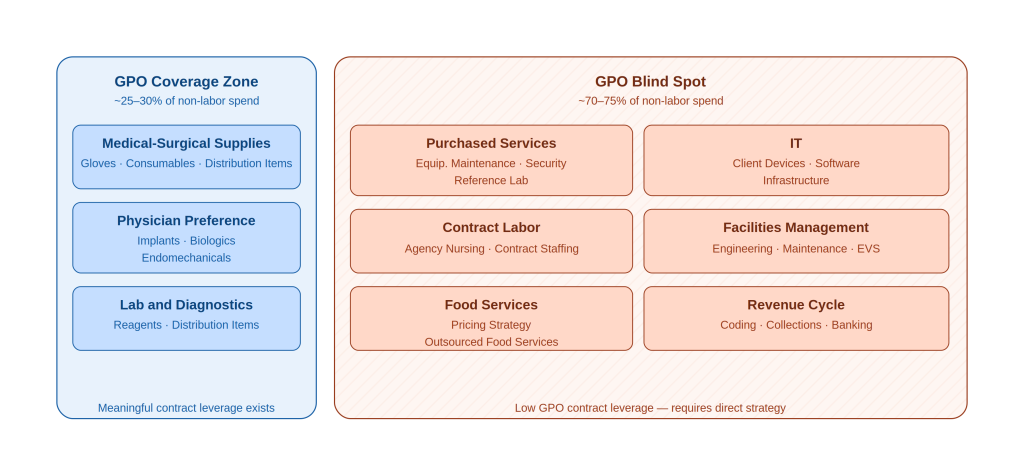
Figure 1. GPO coverage territory relative to total non-labor spend. Categories in the blind spot zone — representing 70-75% of spend — receive no meaningful GPO contract leverage.

Beyond Price: The Levers That Matter Most

Price is one lever among several in a comprehensive margin improvement program, and often not the most powerful one. Utilization reduction, standardization and vendor consolidation, make-versus-buy analysis, and strategic partnerships frequently deliver greater financial impact. These strategies are also largely GPO-agnostic and can directly reduce purchasing volume, ultimately reducing administrative fee revenue. The structural incentive to expand these efforts does not exist within the GPO model. 

Purchased services such as IT, revenue cycle, facilities management, and outsourced ancillary and support functions represent approximately 30% of non-labor spend for most health systems and fall almost entirely outside meaningful GPO influence. External spend for supplies, pharmacy, and purchased services makes up 30 to 40 percent of a typical health system’s total cost base, yet only a fraction of that spend benefits from GPO leverage. In organizations where purchased services constitute 30 to 40 percent of non-labor spend – this is not a minor gap. 

Financial Implications for Executive Leadership

For CFOs, CEOs, and Chief Supply Chain Officers, the structural dynamics described above are not abstract; they have direct impact on margins. 

GPO contracts provide genuine value as a pricing floor. In most categories, they protect hospitals from obvious overpayment and establish a benchmark against which local negotiations can be measured. That is not nothing. But pricing benchmarks do not guarantee optimized total economics, and the distinction matters enormously at scale. 

If GPO contract pricing reflects negotiated averages rather than fully optimized outcomes, the opportunity cost compounds every year. A health system that consistently accepts contract pricing as the destination rather than the starting point leaves meaningful margin on the table recoverable through more assertive local negotiation, utilization management, and category strategies that go beyond price. 

GetImage (2)

Figure 2. Five-year cumulative savings divergence. For a $1B non-labor spend health system, a 3% local negotiation improvement generates a $58M gap over four years compared to a GPO-only baseline. 

The Administrative Fee Question

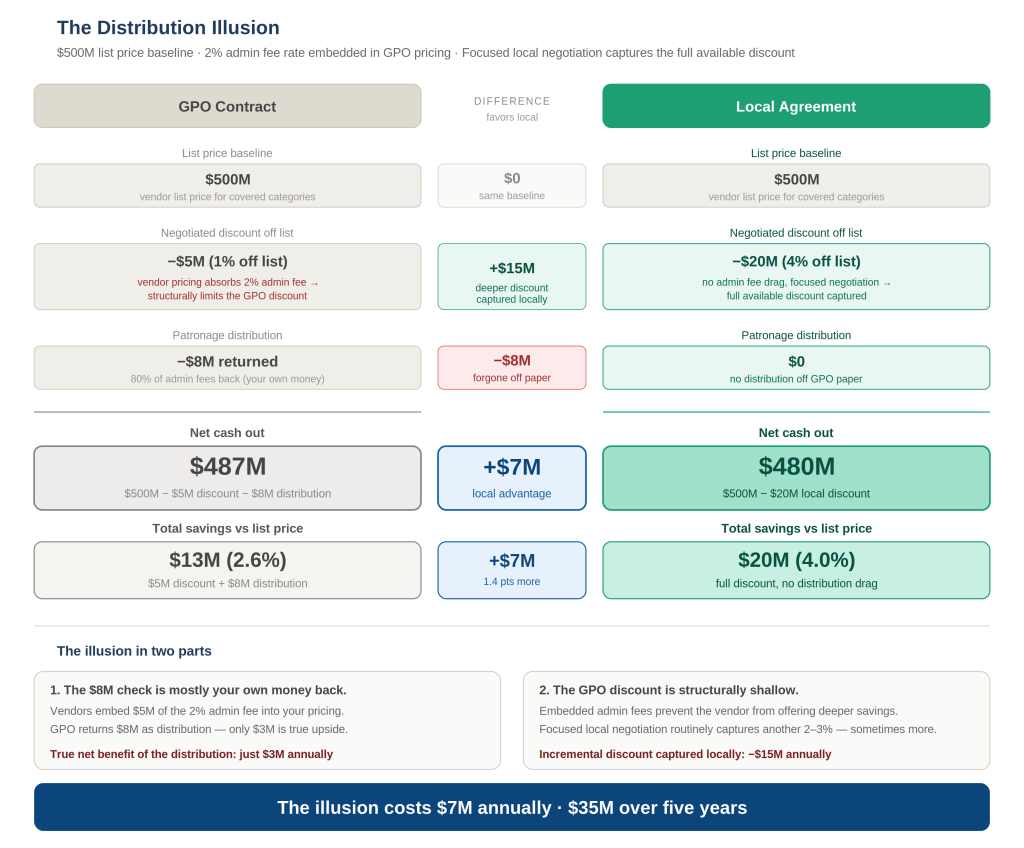
Vendor-funded administrative fees are embedded in the economic structure of GPO contracts. Many GPOs distribute a portion of these fees back to members as patronage dividends, rebates, or credits, and in large systems these distributions can reach seven figures or more annually. GPOs often cite these payments as evidence of aligned incentives. 

However, administrative fees are paid by vendors and are ultimately embedded within the broader pricing structure of purchased goods and services. Member distributions represent a redistribution of GPO economics. Hospitals receive back a portion of the fee stream generated by their own purchasing activity. The question is whether the overall structure, including compliance constraints and category limitations optimizes total non-labor economics or merely returns a fraction of embedded costs. 

If compliance requirements limit the pursuit of deeper savings, the net financial impact of distributions may be outweighed by missed optimization opportunities. A seven-figure distribution does not necessarily offset the cumulative cost of structural constraints across a billion-dollar spend portfolio. 

The Economics of Local Negotiation

One of the most persistent misconceptions in GPO strategy is that moving spend off GPO contract paper creates unacceptable financial risk. In practice, the breakeven threshold is far lower than most organizations assume. 

For a $10M category with a 2% admin fee rate and a 5% distribution rate on gross fees, the total fees-plus-distribution at risk when moving off GPO paper is approximately $210K representing a 2.1% pricing improvement needed simply to break even. Any local negotiation achieving better than a 2.1% price reduction creates net value for the hospital, with no floor on how much better that outcome can be. 

GetImage (3)

Figure 4. Illustrative example assuming $500M covered spend, 2% admin fee, 80% distribution, 1% net GPO discount, and 4% local negotiation discount. 

What Optimization Looks Like In Practice

Pathstone has observed this misalignment firsthand. Working alongside health systems ranging from small rural hospitals to large multi-facility IDNs, we have consistently found that a focused, implementation-led approach that combines the institutional knowledge of the organization with market intelligence that goes deeper than benchmark data unlocks margin that GPO relationships are unable or unwilling to deliver. Across non-labor spend categories, that effort has translated to improvements of 5% or more beyond what existing GPO contracts were providing. 

For example, a large IDN operating both adult and children’s hospitals had a fragmented reference lab partnership model with multiple vendors relying on GPO pricing, or in some cases no contract at all, with no meaningful leverage from volume consolidation or test-level negotiation. Pathstone facilitated a competitive RFP process, supported by test-level utilization analysis and market pricing intelligence, which resulted in consolidation around two primary reference lab partners. This support went beyond just the RFP, but also addressed internal stakeholder concerns to pave the way for smooth adoption and implementation. The new local agreements ultimately delivered best-in-class pricing with no annual spend commitments, simplified vendor management, and generated more than $2M in annual savings, none of which the existing GPO relationship had surfaced or pursued. 

In another instance, a regional health system was fully compliant on its GPO ortho/trauma surgical supplies contract, capturing the top tier discount and an annual distribution payment of approximately $180K. While this seemed optimized, Pathstone’s analysis went deeper, modeling the full potential cost reduction including pricing, fees, and utilization patterns rather than evaluating performance within the context of the existing GPO arrangement. That broader lens revealed significant variance between contracted rates and what a competitive market would return. A targeted RFI with a focused but intentionally reduced volume commitment leveraging best available pricing from multiple vendors (even though it dropped the organization out of its top compliance tier) produced a local agreement priced 15% below the GPO contract rate. The tier drop cost the organization its top-tier discount and some of its distribution, but even absorbing both, the net improvement was $660K annually. 

A Path Forward for Executive Leadership

None of this argues for fully abandoning GPO relationships. The contract access, benchmark data and administrative infrastructure they provide are genuinely valuable, and most organizations would struggle to replicate them independently. The argument is for using GPO participation as one tool in a broader sourcing strategy rather than as a substitute for one. 

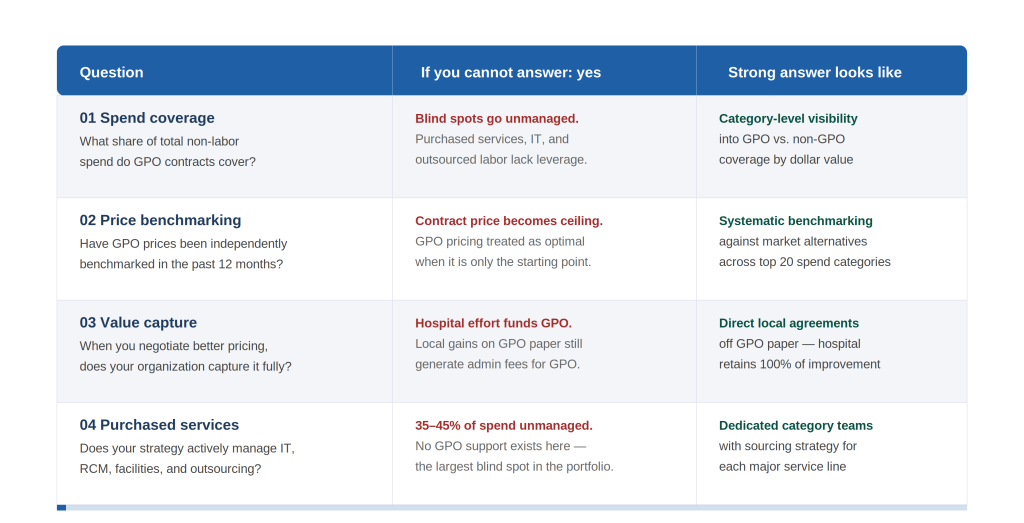
Supply Chain and Finance leadership should be able to answer several foundational questions: What percentage of total non-labor spend is meaningfully influenced by GPO contracts? How are administrative fees structured, and what is their net impact on pricing economics? How frequently is GPO pricing independently benchmarked against market alternatives? How are locally negotiated agreements structured, and who captures the value of hospital-led improvements? 

GetImage (4)

Figure 5. Executive diagnostic scorecard. Four questions to assess GPO optimization readiness. Organizations unable to answer “yes” to all four face material margin exposure.

Organizations that can answer these questions are in a position to use GPO relationships on their own terms, capturing the genuine benefits of contract aggregation while pursuing the deeper optimization that the GPO model is structurally constrained from delivering. Those that cannot are likely leaving margin on the table every year, compounding over time. 

The most durable margin improvement programs in healthcare do not treat any single tool as a ceiling. They use GPO contracts as a floor, local negotiation as a standard practice, utilization management as a discipline, and standardization as a strategic requirement. That combination, not GPO participation alone is what fully optimizes non-labor economics. 

Reach out to Pathstone Partners today to request a no-cost opportunity assessment and discover how we can help your organization plan for the future.


U.S. Government Accountability Office (2014). Group Purchasing Organizations: Funding Structure Has Potential Implications for Medicare Costs. 

Wikipedia. Group Purchasing Organization — History and regulatory background. 

Apenteng B.A. et al. (2024). Role of supply chain intermediaries in steering hospital product choice: Group Purchasing Organizations and biosimilars. PMC / NCBI. 

Ott, J. / symplr (2024). The Overlooked Goldmine: Optimizing Purchased Services in Healthcare Supply Chains. 

McKinsey & Company (2024). Optimizing healthcare supply costs — from the physician’s perspective. 

McKinsey & Company (2022). Optimizing health system supply chain performance. 

Definitive Healthcare (2020). How to control costs by balancing the supply chain. 

Chief Healthcare Executive / symplr (2023). The 4 things supply chain managers wish healthcare executives understood. 

Herrera, A. / Estudios de Economía Aplicada (2006). The Role of Group Purchasing Organizations (GPOs) in the U.S. 

Physician Shortages Threaten U.S. Healthcare

Physician Holding Stethoscope
Key Takeaways:
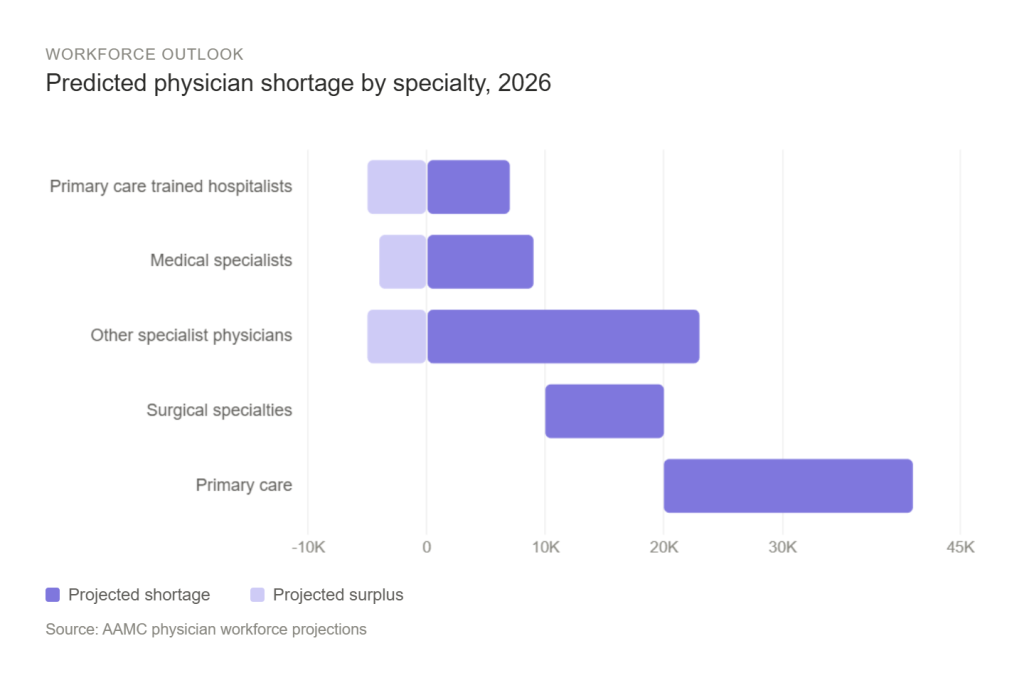
  • The U.S. faces a projected shortage of 86,000 physicians by 2036, with primary care experiencing deficits of up to 40,400 physicians, and surgical specialties facing shortages of up to 19,900 surgeons. 

  • These shortages are driven by an aging population, rising chronic disease burden, and an undersupply of domestic medical school graduates relative to demand. 

  • Rural and underserved communities have struggled to attract and retain physicians, making them disproportionately reliant on foreign-trained physicians  – recent changes to immigration policy may further strain physician supply in the US. 

  • Physician shortages may additionally drive locum tenens costs given projected limited physician demand, as well as increase uncompensated care and force service line reductions.

  • The Resident Physician Shortage Reduction Act (H.R. 3890) may help reduce reliance on foreign-trained physicians; however meaningful workforce relief will likely not materialize until the early 2030s. 

  • Pathstone Partners specializes in helping healthcare organizations implement operational efficiencies that preserve care quality while controlling costs during workforce constraints. 

The physician shortage confronting the United States threatens both the financial viability of healthcare organizations and the health of millions of Americans. According to the Association of American Medical Colleges, the US will face a shortage of between 13,500 and 86,000 physicians by 2036, with demand continuing to outpace supply under all scenarios. The shortage will also impact specialties disproportionately distribution, with primary care experiencing the most severe deficit, between 20,200 and 40,400 physicians by 2036, representing over 10% of the current 234,300 active primary care physicians nationwide. Surgical specialties will also face shortages of 10,100 to 19,900 surgeons, while psychiatry and mental health services are forecasted to see continued critical deficits as demand surges with a growing mental health crisis. 

The Growing Physician Crisis
The Physician Bottleneck and an Aging Population

Multiple factors have created this physician labor crisis – the US population will grow by 8.4% through 2036, however the 65-and-older population will increase disproportionately by 34%, and those 75 and older increasing nearly 55%. Since older Americans utilize physician services at three to four times the rate of younger populations, demand growth also increases accordingly.

Meanwhile, the physician workforce itself is aging. Over 40% of currently active physicians will reach traditional retirement age within the next decade, threatening to remove more than a third of practicing physicians from the system. This retirement wave arrives precisely as demand for physicians accelerates, creating a compounding effect on healthcare systems and patients in need of care. 

The pipeline for new physicians, however, remains constrained. Since 1997, CMS has maintained a cap on federally funded residency positions. While the Consolidated Appropriations Act of 2021 added 1,000 new positions, this falls far short of projected demand needed to account for both an aging physician workforce, and an aging general population. Even if medical school enrollment were expanded today, the 7- to 10- year training timeline means meaningful relief remains approximately a decade away. Geographic maldistribution further compounds this problem as physicians disproportionately concentrate in urban and suburban market, which leaves rural and low-income communities underserved regardless of national supply figures. 

Both California and Congress have begun responding to a need to expand the physician pipeline, though the scale of the proposed solutions are still likely to remain short of the projected need. At the state level, California’s CalMedForce grant program has supported over 1,183 residency positions across 162 programs. Approximately 75% of residents trained in the state remain in California, making in-state training one of the most reliable tools for building a durable local workforce. At the federal level, bipartisan legislation has emerged to finally address the Medicare residency cap that has constrained supply since 1997.

The Resident Physician Shortage Reduction Act (H.R. 3890) would add 14,000 Medicare-funded residency positions over seven years, with 2,000 new slots annually from 2026 through 2032. The bill would also authorize $63.5 million in grant funding for rural hospitals seeking to launch new residency programs. However, if passed, the long training timeline means meaningful workforce relief would not materialize until the early 2030s at the earliest. 

Immigration Policy and the Potential Impact on Vulnerable Communities 

Recent immigration policy changes have also threatened to worsen the shortage where it hurts most. Analysis published in JAMA reveals that in fiscal year 2024, approximately 11,000 physicians, or nearly 1% of the national workforce, were sponsored for H-1B visas. Foreign-trained physicians fill critical gaps particularly in underserved communities –  in US counties with the highest poverty levels, H-1B-sponsored physicians comprise 2% of the physician workforce, which is nearly four times higher than in low-poverty counties, and are also substantially more likely to enter specialties less attractive to US-trained physicians such as primary care and psychiatry.

Recent policy changes, including significant increases to visa-related fees, and in some states, administrative freezes on new applications, have raised some concerns for the future of hospitals which rely significantly on international physician recruitment – particularly those that are smaller or rural institutions that are already operating on thin margins. 

Financial and Clinical Consequences 

Physician shortages translate directly to financial pressure and compromised care. For example, research consistently shows that physician shortages correlate with worse chronic disease outcomes, lower cancer screening rates, and higher mortality. Additionally, capacity challenges also highlight the need to free cash to fund growth and meet patient demand. 

Some examples of more immediate downstream effects for hospitals include: 

  • Uncompensated care rising as communities lose primary care access, forcing patients to delay treatment until conditions require expensive emergency department visits or hospitalizations. 
  • Service line reductions becoming inevitable when organizations cannot recruit or retain physicians in critical specialties. 
  • Rural hospitals may face choosing between maintaining money-losing service lines with expensive contract labor or discontinuing services entirely. 
  • Long-term increases in permanent physician compensation and locums tenens rates as organizations compete for limited talent. 
  • Patient outcomes decreasing due to longer wait times, delayed diagnoses, and reduced access to preventive care. 
Strategic Solutions to Maximize Value  

As physician shortages continue to strain healthcare organizations, Pathstone Partners has worked with clients to implement strategic operational improvements that maximize value from existing resources.  

Our engagements have included reviewing and optimizing virtual care models that allow specialists to serve multiple locations efficiently and enable primary care physicians to consult remotely, therefore gaining more capacity from an existing physician base. A key insight from this work is that telehealth implementation is not one-size-fits-all. Organizations can choose from a spectrum of staffing models depending on their goals, resources, and patient population. Helping clients evaluate and plan across these phases is an important part of building a durable virtual care strategy. 

By appropriately diverting lower-acuity cases, physicians are freed to focus on higher-acuity patients where their expertise is most needed, which improves resource utilization, the quality of care patients are able to receive, and provides meaningful operational improvement particularly for organizations already grappling with physician recruitment challenges.  

Beyond workforce strategy, Pathstone also works across a wide variety of operational initiatives designed to free up cash flow, fund critical priorities, and help organizations meet growing patient demand, including supply chain restructuring, cost reduction, or revenue cycle improvements to help health systems unlock capital that can then be redeployed. 

While the physician shortage represents a significant challenge, forward-thinking organizations can differentiate themselves through operational excellence. Those implementing strategic measures now will be better positioned to maintain care quality and ensure long-term financial sustainability. 

Reach out to Pathstone Partners today to request a no-cost opportunity assessment and discover how we can help your organization plan for the future. 

Sourcing Healthcare Software in the Age of AI: Navigating Vendor AI Noise

AI article picture
Key Takeaways:
  • While AI has become a standard marketing claim across healthcare IT, not all AI is created equal. 
  • Vendors are using AI to justify both price increases, leading health systems to need partners to help understand the ROI of specific software modules.  
  • Competitive sourcing and industry benchmarking data are critical levers to separate marketing from genuine value. 
  • Pathstone clients have achieved 12% – 35% cost reductions on AI-marketed software tools through structured sourcing and negotiation strategies. 
 
Proliferation of AI Tools in Healthcare:

The healthcare IT vendor market has become saturated with AI claims. As of mid-2025, the FDA had authorized over 950 AI/ML-enabled medical devices for marketing in the U.S., and 94% of healthcare companies report using AI in some capacity. Industry analysts have noted that for many incumbent vendors, AI has become a bolt-on marketing feature rather than a core capability. Therefore, hospital supply chain departments are faced with evaluating whether a software tool’s AI component will deliver differentiated value to the organization, or if the AI buzzword is being used to justify price increases.  

AI is already woven into the tools health systems rely on every day, often without recognition. Email platforms suggest language as you type; CRM tools use AI to identify customer segments and drive campaign strategy; clinical platforms embed AI to support imaging reads; GPOs are adding AI to their analytics capabilities; and enterprise technology vendors routinely include AI components aimed at improving productivity or reducing consumption. In short, AI has become table stakes across virtually every category of health system technology. 

 
Observed Vendor AI Marketing & Presentations:

As the healthcare IT space is currently reacting to the proliferation of AI within their software tools, Pathstone Partners has observed changes in the software marketplace. Currently, vendors are often taking one of several contrasting price tactics. Some vendors market AI as an additional value-add which will automate the hospital’s internal workflows and processes, necessitating increased contractual costs. Others pitch AI as automating people processes on the vendor side, reducing their internal resources needed to support their customers. The question is – how are these new AI components impacting the price of these healthcare software tools? Is AI an excuse for companies to charge more for new technology, or, charge less due to a decrease in labor costs? 

 
How Pathstone Drives Cost Savings with IT Vendors Marketing AI Components

Pathstone has helped many clients navigate the healthcare IT space, identifying cost reduction strategies and capitalizing on technology innovations through vendor partnerships. We help health systems identify high‑value opportunities and build strategies needed to execute them effectively. Our approach is practical, datadriven, and aligned to each organization‘s operational and financial priorities. Pathstone works with its clients to analyze and prioritize cost reduction opportunities across all areas within a health system. This includes prioritizing use cases with measurable ROI, as well as developing and facilitating RFPs that clearly define requirements, success metrics, and implementation expectations. Pathstone also supports vendor evaluation, selection, negotiation strategy development, and due diligence to ensure solutions are a good fit for each organization.  

Our contract negotiation strategies are designed to protect the health system’s interests, including pricing models, performance guarantees, data ownership, and scalability provisions. Negotiation strategies are customized to each client and may draw on levers including our internal benchmark data and industry expertise. Given the increasing prevalence of AI-marketed add-ons within healthcare IT, Pathstone has quickly developed expertise in sourcing software tools with an AI component. Below are examples of ways in which we support AI opportunities, cost reduction identification, and execution.  

 
Three Recent Case Studies:

 Client A Case Study: AI Imaging Tool Negotiation

Client A signed a contract to use a vendor’s diagnostic imaging AI tool that would help identify abnormalities with increased accuracies and faster turnaround times. The vendor charged the client a premium, claiming the AI technology-driven innovation justified the higher pricesBased on client billing data, Pathstone determined that Client A was not turning a profit on the cases based on the ratio of reimbursement amounts to vendor costs with the AI component. Pathstone developed a negotiation strategy utilizing our pricing value lever that resulted in obtaining pricing reductions while also receiving a credit, resulting in 13% benefit.  

AI Sourcing Lesson: Hospitals should not blindly accept AI-driven software price increases without evaluating the full vendor/category spend and revenue. 

Client B Case Study: Evaluating AI Components of Marketing CRM Tools

Client B engaged Pathstone to facilitate and develop an RFP for Marketing CRM tools. The participating vendors submitted their proposals, and Pathstone discovered that nearly 70% of vendors advertised an AI component that would increase client productivity around personalization and campaign development. Pathstone partnered with the client to validate these AI capabilities. Through our collaborative efforts, Client B ultimately determined the AI add-ons would be beneficial to the organization but did not warrant the pricing premium. After further evaluation of the proposals and understanding of the capabilities and value adds, Pathstone negotiated 35% of the total cost down through the competitive sourcing process.  

AI Sourcing Lesson: Technology vendors are adding AI productivity components to pricing proposals, necessitating internal hospital evaluation of actual productivity enhancements and expected ROI. 

 Client C Case Study: Technology Usage with AI Component

Client C asked Pathstone to lead and facilitate an RFP for purchasing products through a Cloud Solution Provider (CSP). More than 30% of CSPs submitted bids highlighting their AI tools that would help right-size licenses and identify low utilization and consumption. The suppliers that offered this AI tool marketed this as a value add without an increased premium compared to the CSPs that did not highlight an AI tool. However, Pathstone identified additional opportunity to negotiate pricing through our benchmarking analytics, and we were able to renegotiate pricing by 12% – 16%, targeting both pricing and utilization value levers in this negotiation. 

AI Sourcing LessonIn many instances, AI components of healthcare software tools will provide a net positive benefit to the organization. The competitive sourcing process can be used to identify market leaders within a category who also enhance internal hospital productivity with automation. 

Partner with Pathstone to Drive Margin Improvement through IT Sourcing 

AI is reshaping the vendor landscape in healthcare, and the financial implications are significant, whether vendors are using it to justify price increases or reduce their cost to serve. The right answer for any health system depends on the specific technology, the vendor’s business model, and the organization’s own strategic priorities. At Pathstone Partners, we help health systems ask the right questions. Whether evaluating an AI-enabled tool, facilitating a competitive RFP, or renegotiating an incumbent contract, our approach is data-driven and tailored to each client’s unique situation, ensuring health systems are paying for value. 

Reach out to Pathstone Partners today to request a no-cost opportunity assessment and understand how we can help your organization navigate AI-driven cost pressures. 

Why Pediatric Hospitals Require a Different Playbook: Navigating Financial Pressures with Mission in Mind

Healthcare Consultant 13
Key Takeaways:
  • Pediatric hospitals face unique financial and operational pressures. Reliance on public reimbursement, specialized services, and complex family-centered care creates volatility and constraints that adult-focused strategies may fail to address.

  • Traditional cost-saving models aren’t enough. Pediatric systems require customized benchmarks and sourcing strategies tailored to increasingly high complexity portfolios, and approaches that reflect their mission-driven care philosophy.

  • A tailored strategy can protect mission and margin. By aligning cost and operational initiatives with patient experience, philanthropy, and peer-driven innovation, Pathstone Partners helps children’s hospitals achieve sustainable financial results without compromising quality of care.

It is often said in healthcare that children are not just small adults. While pediatric and adult hospitals share many foundational structures and challenges, the context in which pediatric hospitals operate introduces distinct strategic considerations that require a more tailored approach.

Projected shifts in Medicare and Medicaid reimbursement models, combined with growing uncertainty around federal research funding, are creating new financial pressures across the healthcare industry. But these pressures are felt most acutely in pediatric systems, where Medicaid covers roughly half of all patients treated at children’s hospitals. This disproportionate reliance on public reimbursement introduces significant financial volatility. At the same time, many children’s hospitals also serve as academic and research hubs, meaning reductions in grant or foundation funding can directly threaten their ability to advance groundbreaking therapies for rare and complex childhood diseases.

These realities demand a different playbook — one that balances mission-driven care for children and families with the operational discipline needed to thrive in an evolving reimbursement environment.

At Pathstone Partners, we have had the privilege of working closely with both adult and pediatric healthcare organizations. Through this breadth of work, we’ve learned how to adapt our strategies and methodologies to address the unique operational, clinical, and financial dynamics of pediatric hospitals — helping them navigate financial pressures without compromising their mission to provide compassionate, specialized care to children and families.


Understanding the Nuances: Pediatric vs Adult Hospital Operations

While pediatric and adult hospitals share many structural and operational similarities, the context, complexity, and strategic considerations behind their operations are often very different. Recognizing these distinctions is essential to designing cost-reduction strategies, vendor partnerships, and operational solutions that truly work, not just in theory, but in practice.

  • Peer Collaboration Drives Adoption in Pediatrics: Pediatric hospitals operate in a highly collaborative ecosystem. Peer organizations often share operational learnings and best practices, creating a strong sense of trust and alignment. While collaboration exists across all healthcare systems, pediatric networks tend to be smaller and more tightly connected, amplifying peer influence. If a solution works at one children’s hospital, other children’s hospitals are considerably more likely to adopt that solution.
    • Strategic Implication: Leveraging peer networks is often the fastest path to implementation success in pediatric environments.
  • Benchmarking Requires Customization: Benchmarking is central to evaluating performance across both adult and pediatric systems. However, pediatric hospitals cannot simply import adult benchmarks without adjustment. Many pediatric hospitals rely on specialized suppliers with limited market alternatives, meaning they manage a broader range of SKUs and unique cost structures. Similarly, operational processes such as digital patient statements involve higher complexity due to guardian and family account linkages.
    • Strategic Implication: Pediatric systems require purpose-built operational and financial benchmarks. Applying adult system benchmarks without adjustment can lead to unrealistic targets and missed opportunities.
  • Operational Complexity Impacts Scale and Strategy: Like adult hospitals, pediatric systems are under pressure to improve efficiency and control costs. Unlike many adult systems, pediatric hospitals often face constrained or declining volumes alongside increasing clinical complexity. This dynamic reduces scale leverage and limits standardization. Niche suppliers, highly specialized therapies, and regulatory requirements further constrain pricing flexibility. At the same time, digital and operational processes must support family-centered care models, introducing additional layers of complexity.
    • Strategic Implication: Cost-reduction and operational improvement strategies must be designed specifically for pediatric environments rather than assumed to translate directly from adult health systems.
  • Philosophy and Expectations Differ in Pediatrics: Pediatric hospitals operate with a philosophy that places family involvement, emotional sensitivity, and mission-driven care at the center of every interaction. Operational areas, such as language services, are more complex, often involving sensitive conversations that extend beyond the patient to parents and caregivers. Similarly, decisions around employee care models may also introduce unique considerations, such as whether and how to support adult family members within pediatric-focused systems.
    • Strategic Implication: Pediatric strategies must reflect the values and expectations of patients, families, and staff, not solely financial or operational metrics.


How Pathstone Partners Drives Impact in Pediatric Healthcare

Traditional consulting approaches often fall short in pediatric settings — not because adult-system strategies are ineffective, but because they require intentional adaptation. Children’s hospitals operate with distinct scale, clinical complexity, and mission-driven priorities that demand more than surface-level customization.

Pathstone Partners has intentionally partnered with pediatric organizations to apply a methodology that aligns cost and operational improvements with patient experience, philanthropic strategy, and peer-driven innovation.

Our approach delivers measurable financial and operational results while preserving the clinical sensitivity and family-centered care that define pediatric healthcare:

  • Redefining performance metrics to balance financial discipline with patient and family experience goals to ensure cost reduction does not come at the expense of mission.
  • Designing sourcing and operational strategies to address low-volume, high-complexity product portfolios, optimize supplier relationships, and streamline high-variability workflows.
  • Building pediatric-specific frameworks grounded in real market intelligence, supplier pricing insights, and operational best practices to set realistic, actionable targets.
  • Leveraging peer networks to accelerate decision-making and adoption of best practices and positioning hospitals as innovation leaders across the pediatric landscape.
  • Incorporating philanthropy and alternative funding streams into financial sustainability strategies to support access and impact.
  • Partnering directly with clinical and operational leaders to ensure solutions reflect on-the-ground realities, operational constraints, and patient needs.
InitiativeAnnual SpendBenefit RealizedImpactValue LeversStrategyPediatric-Tailored Approach
Interpretive Services$6.0M$1.2M20% Cost ReductionPricingCompetitive sourcing and contract negotiationPrioritized in-person and video interpretation for sensitive pediatric interactions, ensuring clear communication with young patients and families while improving service reliability and cost efficiency
Inhaled Nitric Oxide$2.0M$1.0M50% Cost ReductionPricingCompetitive sourcingAddressed high pediatric utilization by negotiating volume-based discounts and ensuring full ventilator and transport compatibility across neonatal and pediatric intensive care units
Bad Debt Collections$950K$2.2M230% Revenue IncreaseRevenue, PricingCompetitive sourcingIntroduced patient-sensitive collection protocols that preserve hospital reputation and patient trust while improving yield and reducing uncompensated care
 
Partnering for the Future

As financial pressures intensify across the healthcare landscape, pediatric hospitals will need partners who understand both what they share with adult systems and what truly sets them apart. At Pathstone Partners, we bring experience across the full healthcare continuum and a proven ability to translate that experience into pediatric-specific strategies that drive results.

Reach out to Pathstone Partners today to request a no-cost opportunity assessment and understand how we can help drive financial efficiency for your organization.

Improving the Affordability and Access to Language Services

Improving the Affordability and Access to Language Services
Key Takeaways:
  • Hospitals are facing increased interpretive service costs due to rising demand for rare languages, increasing costs for ASL and on-site interpretation, and a growing LEP patient population, highlighting the need for modernized language access models.

  • Within the last year, Pathstone helped three hospitals achieve $1.4M, $1.3M, and $1.7M respectively in annual benefit through vendor consolidation, contract optimization, and telehealth integration.

  • Success was driven by early stakeholder engagement, hybrid service models, and tailoring solutions to each hospital’s unique needs.

In our recent work with multiple hospital clients, we focused on a common but often overlooked challenge: interpretation and translation services. While language access is essential to delivering safe, equitable care, many health systems struggle with outdated models, fragmented vendor relationships, and rapidly shifting patient needs. Despite different starting points, each organization shared a commitment to improving care for patients with Limited English Proficiency (LEP) or hearing impairments.

Let’s explore why interpretation services matter, the current industry landscape, and how hospitals can take practical steps to modernize and optimize their approach. We’ll draw from case studies across our client base to demonstrate meaningful results. Pathstone Partners helps hospital systems improve language services access and costs by reducing interpretation & translation service spend while improving, not sacrificing service quality and compliance through vendor consolidation, contract optimization, and performance monitoring.

Why Language Access Should Be a Priority

Hospitals are required by law to provide interpretation and translation services, including in-person interpretation, over-the-phone interpretation (OPI), video remote interpretation (VRI), and document translation. For patients who don’t speak English fluently or who rely on American Sign Language (ASL), clear communication is directly tied to safety, trust, and improved clinical outcomes. These services ensure patients with Limited English Proficiency (LEP) or those who are deaf or hard of hearing can understand and actively participate in their care, provide informed consent, and participate meaningfully in clinical decisions.

Interpretation services are particularly important as miscommunication in a medical setting can lead to medication errors, missed diagnoses, or avoidable readmissions. Effective language access programs enhance patient satisfaction, reduce liability, and support more informed clinical decision-making for physicians and patients. These services are not only a clinical asset, but also a strategic investment in risk management, compliance, and operational efficiency.

The Demand is Growing Rapidly

Interpretation needs vary significantly by hospital depending on patient demographic, service lines, and in-house capabilities. Many hospitals rely on multiple vendors, each with different pricing structures and service levels. This often leads to administrative burden, inconsistent quality, and limited visibility into performance.

Meanwhile, the US population is becoming increasingly linguistically diverse. According to the US Census Bureau, nearly 68 million Americans speak a language other than English at home, tripling since 1980. Over 8% (25 million Americans) are classified as having Limited English Proficiency. Notably, the growth in non-native English speakers who don’t speak English well has outpaced those who do, especially over the past four years, as shown below.

Source: Data compiled from 2024 US Census Bureau Tables American Community Survey (ACS) annual estimates from Table B16001 – “Language Spoken at Home by Ability to Speak English for the Population 5 Years and Older”

In January 2025, the US immigrant population reached an all-time high of 53 million, making up 15.8% of the total population. This surge reflects a broader trend, with 2023 seeing the largest annual increase in the foreign-born population since 2000. This isn’t just driving demand for commonly spoken languages like Spanish or Mandarin; hospitals are now experiencing increased needs for rarer languages such as Amharic, Tigrinya, Burmese, Nepali, Pashto, and Dari.

At the same time, industry trends like offshoring language services have introduced interpreters with limited knowledge of US healthcare, raising quality concerns. In-person ASL interpreters are becoming more difficult to source and more expensive. As local demographics evolve rapidly, hospitals often realize too late that their coverage no longer aligns with the communities they serve.

Without centralized oversight or strategic planning, it’s easy to overspend, miss coverage gaps, or lose sight of performance metrics. Hospitals committed to health equity, patient safety, and financial efficiency must reevaluate their language access strategy.

A Closer Look: Three Hospitals, Three Approaches

Across our client engagements, we have seen that while challenges may be similar, solutions must be tailored. Below, we share highlights from three hospitals in which we approached language financial improvement from different angles, and each has resulted in high-impact meaningful results.

QualityClient 1Client 2Client 3
Baseline6 incumbent vendors, High use of in-person interpretation with certified interpreters, Administrative burden due to fragmented vendor landscape, Strict compliance with local interpreting laws4 incumbent vendors, Rising demand for language services with further increases projected, In-house interpreters primarily utilized for in-person services8 incumbent vendors, Rising demand of rare languages due to influx of immigrants locally, Team of internal interpreters primarily focused on in-person services covering 4 languages
Value Levers EmployedPrice, StandardizationPrice, StandardizationPrice, Standardization
Most Common Languages (Not including Spanish)Russian, Vietnamese, Arabic, ASLArabic, Dari, Amharic, ASLArabic, Dari, Amharic, ASL
Results$1.4M annual benefit, Successful transition to nationally recognized telehealth vendor as well as audio, video, in-person and written vendors, Maintained patient experience and quality standards$1.3M annual benefit, Consolidated audio and video services from 4 vendors to 1 offering comprehensive rates and coverage$1.7M benefit, Successful transition of audio, video, in-person, and written translation services, Consolidation of vendors from 8 to 3, Telehealth and Call Center integration at no additional cost
Unique AttributesLongstanding vendor relationships made transition politically and operationally sensitive, Client risk averse about offshoring and Artificial Intelligence2/3 service modalities were transitioned (audio and video); in-person services remained with incumbents, Telehealth and written translation not included in scope of engagementPrevious vendor standardization efforts were interrupted by COVID-19 which altered industry dynamics including suppliers’ reluctance to provide on-site interpretation citing inadequate compensation
Key TakeawaysEven systems with limited flexibility can achieve meaningful savings with strategic vendor negotiations, Quality and compliance do not need to be sacrificed when modernizing language services, Vendor billing dynamics (e.g., Coordinated Care Organization relationship) which managesClearly communicating vendor model benefits can shift client mindset, Clients value strategies that build early trust such as patient surveys that demonstrate user-centered planning, Clients can be receptive to primarily contractor-basedStandardizing language services can reduce administrative burden and improve efficiency system-wide, Vendor adaptability is important — choose a partner that aligns with your organization’s unique needs which change over time, Information Systems teams should be involved early in RFPs

What Drove Success

  1. Modernizing Doesn’t Mean Sacrificing Quality: Even with strict compliance requirements, the hospital improved service delivery and cost efficiency through better contracts and vendor alignment.

  2. Vendor Education Was Key: Initially skeptical executives embraced new models once they understood the operational gains and scalability.

  3. Trust-Building Early Helped Later: Staff buy-in was secured through early surveys and needs assessments, leading to smoother implementation.

  4. Balanced Vendor Models Outperformed: Combining in-house and vendor-based services allowed flexibility and optimized resource use.

  5. Future-Proofing for Demographics: Attention to rare language trends helped avoid gaps and enabled planning for future demand.

  6. Standardization Reduced Leakage: Clear vendor workflows and centralized oversight eliminated off-contract usage and improved compliance.

Looking Forward

The need for high-quality interpretation and translation services will only grow. Leading hospital systems are shifting from reactive, compliance-only language access models to proactive, strategic programs. These programs enhance patient safety, support health equity, and deliver measurable financial outcomes.

At Pathstone, we help hospitals build sustainable, data-driven language access strategies. Our work delivers cost savings while maintaining quality and compliance. Let’s discuss how your system can modernize language services and support every patient with the right care, in the right language.

Pharmacy Benefit Managers (PBMs): Why Hospitals Should Pay Attention

Pharmacy Benefit Manager

Pharmacy Benefit Managers (PBMs) play a complex role in healthcare, managing employee pharmacy benefits, while also impacting hospital-owned pharmacy revenue. For hospitals, this dual exposure makes transparency around PBM pricing, contracts, and performance essential. As scrutiny and regulation increase, hospitals must take a proactive approach to managing these relationships. Pathstone helps hospitals navigate this complexity through a vendor-agnostic, data-driven approach — bringing transparency to PBM selection, optimizing financial performance, and aligning benefit strategy with clinical and operational goals.

PBMs and the Hospital Landscape

Acting as intermediaries between insurers, pharmacies, and drug manufacturers, PBMs are responsible for administering formularies, negotiating drug prices, and managing prescription benefit programs for employers, health plans, and other third-party payers.

In the hospital setting, however, their role extends beyond employee benefit administration. PBMs directly affect both what the hospital pays for employee prescriptions and the reimbursement it earns when those prescriptions are filled internally through hospital-owned outpatient or retail pharmacies.

As a result of this unique dual exposure, transparency into PBM pricing, contract terms, and reimbursement structures is essential. For hospitals, these factors are not just administrative concerns; they are strategic levers that influence drug spend, care access, and the financial performance of the health system’s pharmacy operations.

PBMs Under Scrutiny

PBMs have come under increasing scrutiny in recent years from policymakers, media, and healthcare stakeholders due to concerns that their business practices are contributing to rising prescription drug costs. Central to the debate are claims of inflated pricing structures, rebates designed to influence drug usage, and a lack of transparency — all of which raise broader concerns about fairness, accountability, and market dynamics.

A primary concern is spread pricing, where PBMs charge health plans more than they reimburse pharmacies for the same drug. This lack of transparency makes it difficult for hospitals and other plan sponsors to fully understand their pharmacy spend or assess the value of PBM services.

Vertical integration is another issue drawing scrutiny, in which some PBMs are part of larger organizations that also own retail pharmacies. This structure allows a PBM to manage the drug benefit while directing prescriptions to its own pharmacies — effectively controlling both the pricing and the dispensing of medications. Lawmakers worry that this reduces competition and limits patient choice.

Across the country, state legislators are beginning to respond by pursuing new regulations, reflecting a broader movement toward promoting competition, transparency, and fairness in how PBMs operate.

  • Arkansas enacted a law in April 2025 prohibiting PBMs or their subsidiaries from owning or acquiring retail pharmacy permits, in an effort to reduce conflicts of interest and support market competition.
  • Indiana’s Senate Bill 140 requires PBMs to maintain accessible and adequate pharmacy networks, ensuring patients are not restricted by narrow formularies or limited pharmacy access.
  • Iowa’s Senate File 383 passed June 2025 limits PBMs’ ability to steer patients or profit through spread pricing, while establishing an appeals process to protect rural and independent pharmacies from below-cost reimbursements.

As regulatory momentum builds, hospitals should stay informed about PBM-related policies, as these changes may directly impact employee health plans, pharmacy reimbursement, and patient access to medications, as well as impact on 340B pricing.

Case Study: Selecting a Strategic PBM Partner

Pathstone Partners recently supported a health system facing increased challenges with their PBM, who provided limited transparency around current pricing structures, discount/rebate guarantees, and data access, creating a lack of visibility and accountability that prompted the need for change. Thus, we partnered to conduct a comprehensive RFP process to evaluate, identify, and select a long-term, strategic PBM partner offering competitive and transparent pricing.

To support a robust and objective evaluation, a cross-functional committee with representatives from Human Resources, Finance, Pharmacy, Revenue Cycle, IT, and Nursing was established. This diverse team ensured a comprehensive review of vendors, balancing financial goals with operational and clinical priorities.

Vendor Types Considered

Three distinct PBM models were included in the RFP process, each offering a different approach to managing pharmacy benefits:

  1. PBM Coalitions: Collective of employers, health plans, and other entities that jointly negotiate and manage pharmacy benefits to achieve better terms and pricing through scale.
  2. Pharmacy Benefit Optimizers (PBOs): Independent organizations working with benefit consultants to optimize pharmacy arrangements with a focus on tailoring clinical programs, direct member services, and more aggressive pricing structures.
  3. Traditional (Direct) PBMs: Full-service third-party administrators that manage prescription drug plans for self-funded employers, health plans, and other entities, providing end-to-end pharmacy benefit services.
Financial Evaluation Criteria

To ensure meaningful financial outcomes, Pathstone evaluated vendors using several key cost metrics:

  • Drug Discounts: The competitiveness of discount rates, often expressed as a percentage off the Average Wholesale Price, is a key determinant of projected pharmacy spend. These rates vary by drug class (specialty, retail, and generic) and reflect the PBM’s ability to negotiate favorable pricing on behalf of the health system.
  • Rebates: Rebate guarantees, negotiated between PBMs and drug manufacturers, directly reduce net drug costs. The size and structure of rebates, often varying by drug class, represent a significant portion of overall pharmacy benefit savings.
  • Formulary Flexibility: Flexibility within a PBM’s standard formulary can reduce administrative burden and cost. The ability to adjust brand and generic coverage without creating a fully custom formulary is particularly important for hospitals seeking to balance cost control with clinical appropriateness.
Value-Added Services Evaluated

Beyond core financial components, several program features were identified as opportunities to enhance value for the hospital and its employees:

  • Biosimilar Conversion Support: Strategic support for transitioning to biosimilars (lower-cost, clinically equivalent alternatives to specialty drugs) and driving adoption within the employee health plan due to the required clinical stakeholder buy-in.
  • Co-Pay Assistance Programs: Programs that reduce out-of-pocket costs for employees through manufacturer support or co-pay offset mechanisms can improve medication adherence and affordability.
  • Clinical Programs: Integrated clinical services, such as medication therapy management, adherence monitoring, and chronic disease support, contribute to better outcomes and long-term cost control.
  • Other Innovations: Additional offerings, such as utilization management tools, digital engagement platforms, or reporting dashboards, which can provide operational efficiencies and enhanced oversight.
How Pathstone Partners Can Help

At Pathstone, we take a vendor-agnostic approach to PBM evaluations, helping health systems navigate the complexities of PBM selection with a focus on transparency, long-term value, and strategic alignment.

Our services include:

  • Procurement Support: Facilitating a fair and methodical sourcing process to identify and assess PBM options through a fully vendor-agnostic lens.
  • Pharmacy Benefit Strategy: Providing guidance on long-term PBM and pharmaceutical health plan strategy, including recommendations for formulary design and biosimilar adoption to maximize value across the health plan.
  • Model Evaluation and Fit: Supporting a structured comparison of the full range of PBM models by outlining the benefits, drawbacks, and trade-offs of each to identify the model that best aligns with your organization’s current needs and long-term goals.

An Adaptable Approach Through the Covid-19 Pandemic

Pathstone Partners Chicago Health Care Consulting (11)
The supply chain leadership of a large $2B integrated health system identified the need to elevate its procurement function by establishing a strategic sourcing function that is critical in driving long-term value to the organization, then Covid-19 hit.

The supply chain leadership of a large $2B integrated health system identified the need to elevate its procurement function by establishing a strategic sourcing function that is critical in driving long-term value to the organization.

The client had limited strategic sourcing resources to serve its internal customers, partner with its supplier base, and address total non-labor expenditures of $1B.

Furthermore, the client was facing budget constraints that created challenges to secure resources to recruit, train and grow a team that is critical to its ability to achieve its goals.

As a result, the client engaged Pathstone to partner with the organization to embark on a journey to transform its procurement function to deliver and sustain value over the long-term.

Pathstone introduced its Balanced Partnership® approach, which offers a flexible support model that scales with each of the three phases of the client’s transformation journey.

Phase 1: Start-Up (Year 0-2)

  • Pathstone led support to identify and implement non-labor and strategic sourcing savings across all categories.
  • “Quick win” categories were identified and implemented such as translation services, records management, managed print, telecom.
  • After securing several wins, Pathstone worked with supply chain leadership to develop a business case to recruit and hire additional strategic sourcing FTEs to accelerate efforts.
  • The client was able to mitigate financial headwinds by achieving $2.5M+ in annual savings through Pathstone-led initiatives.

Phase 2a: Momentum (Years 2-3)

  • Pathstone worked with the newly formed sourcing function to plan for the next wave non-labor expense reduction initiatives.
  • Pathstone and the client allocated initiative responsibilities between both teams to maximize overall return on investment (ROI).
  • Complex categories such as Rx, lab and revenue cycle, purchased services were assigned to Pathstone.
  • Less complex categories such as clinical and non-clinical supplies were assigned to the client team.
  • Achievement of $7.5M in benefit through ongoing Increased non-labor spend addressed by the client supply chain team to impact cost.

Phase 2b Resilience (Year 4-5)

  • Emergence of the COVID-19 pandemic, leading to supply chain disruption, and significant financial challenges.
  • Pathstone worked with the client sourcing team to proactive source and secure PPE (gloves, gowns, sanitizers) needed by front-line staff.
  • Pathstone partnered with executive leadership to engage top spend and strategic suppliers to secure short-term concessions to mitigate financial impact.
  • Pathstone worked with IT leadership to evaluate and rationalize IT investments.
  • Quick implementation of $15M in non-labor expense savings within 9 months by engaging strategic suppliers.

Phase 3 Sustainability (Years 6+)

  • Pathstone provided ad-hoc implementation support on targeted complex categories in Rx, Lab and Biomed.
  • Pathstone also provided market intelligence, training and post-implementation reviews to augment the client’s ability to drive and sustain long-term value.
  • Achievement of $10M of benefit (combined team effort).

As a result of Pathstone’s Balanced Partnership® approach, the client was able to achieve the following results:

  • Achievement of $35M+ annual non-labor expense reduction: The client achieved over $35M+ in annual savings in all major non-labor spend categories, including clinical supplies, information technology, telecom, pharmacy, lab, support services and purchased services.
  • Enhanced credibility and relationships with internal stakeholders: Previously, the supply chain & sourcing team had limited resources to truly serve the needs of its customers and the organization. Over time, internal customers viewed supply chain as a strategic advisor that can make a meaningful contribution to their departments. The paradigm shift led to earlier integration of supply chain
  • Increased internal knowledge & expertise: Pathstone served as an extension of the client sourcing team, which enables the client to “learn by osmosis” by jointly participating in a full strategic sourcing lifecycle from start to finish. Furthermore, through Pathstone’s ad-hoc support model, the internal team gained access to formal training and knowledge sharing sessions that facilitated their growth over time.
  • Enhanced ROI over time: Through Pathstone’s flexible model and investment in the client team, overall return on investment on supply chain & Pathstone resources increased from 4x to 10x. This was largely driven by the supply chain team’s growing capabilities, which led to a higher number of spend addressed and impacted internally as opposed to relying on Pathstone’s resources over time.
  • Sustainability: With access to Pathstone’s ad-hoc support including market insights/leading practices, negotiation support and post-implementation support, the client significantly increased its ability to sustain benefit achieved over time. For instance, Pathstone conducted a post-implementation review of a translation services sourcing event, which revealed over $1M+ in value leakage over-time due to lack of contract pricing compliance. The client utilized Pathstone’s findings to address both pricing and utilization opportunities to drive costs down with its key suppliers.

Coordination Across Fragmented Hyperbaric Oxygen Programs

Health Care Financial Consultant Hyperbaric Oxygen
Pathstone affected $120K+ annual savings for the highest-cost program via management fee reduction and program director cost reduction.

A west coast health system engaged our firm to review Wound Care Hyperbaric Oxygen (HBOT) programs across their organization. Hyperbaric Oxygen programs represented a $9M spend category on a mix of outsource and insourced staff, equipment, software, and corresponding supplies. Each hospital that has a Hyperbaric Oxygen program is in a distinct geographical setting from each other, varies by program maturity, and relies on an outsourced vendor to provide treatments for their patients.

Pathstone was introduced to this spend category due to lack of visibility into program structure across the health system and an ongoing negotiation between one hospital with the primary outsourced vendor of the system. This health system did not have supply chain members that oversaw HBOT contracts, and the health system desired to work as one system to standardize operations and drive efficiencies from a financial and service-level perspective.

Each strategy is driven by data – in conjunction with financial leadership at each location, Pathstone formed a robust framework to collect and organize data regarding the financial and service–level performance of each program. Comparisons of revenue, reimbursement, cost, and staffing between each program were built to drive program stakeholders towards actionable insights (i.e., why does my program have less treatment volume, but more nurses? How is that program able to drive X% revenue more than my program? Why are our staffing costs higher than the other programs?).

A market roadshow with the clinical and operational teams followed with each hospital to understand key pain points, opportunities for improvement, and level of category expertise. We found there were significant differences across programs in two categories:

  • Overall outsourced costs: outsourced staffing of program directors was more expensive than insourced program directors
  • FTEs per case volume: two programs were more efficient than the other two programs.

We aligned with system and local leadership to issue a request for quote (RFQ) in efforts to reduce costs and set up system knowledge sharing to improve efficiency across each program. The RFQ was constructed for the primary incumbent supplier (75% of programs) intended to improve cost competitiveness, initiate knowledge sharing across the programs, and align program category expertise using mature programs and the primary outsourced vendor.

Pathstone affected $120K+ annual savings for the highest-cost program via management fee reduction and program director cost reduction, representing 33% of outsourced program spend. This program was mature in nature, yet still relied heavily on their outsourced provider. The goal will be to eventually insource the director of this program for additional cost savings.

More than cost-improvement, our client was interested in how other programs were able to manage volumes without as many outsourced staffing members. The RFQ focused on areas where the outsourced provider could provide synergies from a staffing perspective and outsourced management was removed from the agreement. The primary outsourced vendor will now provide semi-annual reviews to discuss reimbursement improvement, cost reduction, and service level improvement opportunities for all their programs in the system. Also, Pathstone helped initiate and create an internal engagement platform for best practice, knowledge sharing to drive utilization, revenue, cost, and service-level efficiencies through an online platform for program stakeholders to discuss and share data across the system.

Before our engagement, HBOT programs at this integrated delivery network were fragmented and costly. After, HBOT stakeholders across the organization can discuss best practices and share data, have an outsourced category expert provider leading semi-annual discussions geared towards improvement opportunities, and have achieved cost reduction at the target program.

Delivering Benefits Through Biosimilar Conversion

Health Care Financial Consultant Pharmacy Cost
Pathstone developed drove $767K in expected annual net margin enhancement.

A large 11-hospital health system in the southern region recognized a need for external support to identify and implement solutions to enhance net margin within their pharmacy operations. Upon analyzing initial core data, the pharmacy to convert several reference drugs to biosimilars, which are biological products that have no clinically meaningful differences in terms of safety, purity, and potency, to reference drugs. For example, the reference drug for Pegfilgrastim, an injection received after receiving chemotherapy to promote white blood cell development, is Neulasta, while approved biosimilars for Pegfilgrastim include Nyvepria, Fulphila, Udenyca, and Ziextenzo.

Initial opportunity was identified at ~$750K in annual net margin opportunity through converting Pegfilgrastim, Bevacizumab, and Trastuzumab to biosimilar products with higher net margins.

Pathstone’s pharmacy consultants began by segmenting purchases by reference drug category (e.g., Pegfilgrastim) and account type (e.g., 340B, GPO), and charges by account type and payor type (e.g., Medicare, Commercial). It was quickly determined that there was significant financial opportunity through converting biosimilar products for 340B Medicare.

Pathstone began the analysis focusing on Medicare given the reimbursement rates are publicly set by CMS through Healthcare Common Procedure Coding System (HCPCS). The highest net margin biosimilars for 340B Medicare were Nyvepria (Pegfilgrastim), Zirabev (Bevacizumab), and Ontruzand (Trastuzumab).

Pathstone subsequently investigated opportunity on the 340B Commercial side by examining fee schedules by payor for the top five commercial payors. The highest net margin biosimilars on the Commercial side were very similar to Medicare, with minor variance in the biosimilar with the highest net margin for a given reference drug. However, payors do not always reimburse for all biosimilars.

Over a ~six-month period of working with , biosimilar identification strategy that Pathstone developed drove $767K in expected annual net margin enhancement. As costs and reimbursement are subject to fluctuation, Pathstone developed methodology for tracking and monitoring realized net margin gains on a monthly basis to be able to pivot if and when other biosimilar products yield higher net margins.

Driving Value in Recurring Pharmacy Revenue

Health Care Financial Consultant Pharmacy
Over a 9-month period of working with our client, Pathstone was able to drive $5.56M in recurring revenue enhancements.

A large 4-campus health system in the southern region recognized the need for external support to identify and implement sustainable solutions to increase & maximize revenues within pharmacy. Pathstone was initially engaged to conduct a full-scale business case to identify opportunities within the pharmacy space, of which, 3 specific areas of pharmacy revenue cycle were moved to implementation.

Initial opportunity was identified at over $3.0M in recurring annual value through focusing on the following workstreams:

  • Rx Strategic Pricing: Restructuring pharmacy pricing methodology to be more transparent, more easily maintained and make up lost revenue during the client’s transition to charge on administration.
  • NDC Cost Update: Optimizing NDC cost updates through an evaluation and mapping of the current drug update processes and current technology capabilities.
    Rx Revenue Capture: Maximizing the revenue simultaneously improving on missed revenues

Pathstone formed a comprehensive team of stakeholders throughout the organization consisting of key leaders and operational owners within: Pharmacy, Revenue Cycle, Finance and Supply Chain. Recurring touchpoints with this team and other subcommittees generated the necessary momentum and buy-in to achieve maximum value and sustainable success.

Pathstone’s original business case gave excellent insight into the historical performance of this client, but ever-changing regulations and innovations made it necessary to garner new and refreshed data around billing & claims detail, charge master, drug database, revenue & usage, wholesaler catalog(s) and other policies and procedures.

Within each of the identified 3 workstreams the Pathstone pharmacy consulting team utilized a collaborative approach to tailor a solution that fit within the client’s department and organizational goals and objectives:

Rx Strategic Pricing

  • Meet net revenue goals by modifying markups and/or to include within annual increase in budgeted revenue
  • Mitigate lost net revenue during transition to charge on admin
  • Transition to charge on administration
  • Create strategy to modify markups to meet net revenue goals
  • Increase collaboration with Rx, care contract management and rev cycle
  • Simplify charges with increased transparency and defensibility

NDC Cost Update

  • Sustainability and maintenance of drug cost database
  • Streamline technology and database updates to optimize daily, weekly, monthly, quarterly and annual drug update processes
  • Evaluate other opportunities to optimize technology related to the drug database and revenue cycle

Rx Revenue Capture

  • Identify and recoup missed revenue on specific drugs
  • Complete full audit of pharmacy HCPCS code assignment, usage, correlating bills and collections

Key drivers of the significant value stream were concentrated on increasing the gross revenue by $195M, mitigating losses by transitioning to charge on administration, identification of over 165 ERX IDs without HCPCS codes.

Over a 9-month period of working with our client, Pathstone was able to drive $5.56M in recurring revenue enhancements.

Employee Health Plan Prescription Drug Revenue & Net Margin

Health Care Financial Consultant Lower Prescription Dug Cost
Pathstone worked to ensure CMM program met 340B Drug Pricing Program requirements and increased overall 340B capture rate.

A multi-hospital health system on the west coast partnered with Pathstone to evaluate Employee Health Plan pre-rebate prescription drug spend ($40M+ annually). The health system was interested in internalizing services where the quality of care could be improved, and financial value could also be achieved. Pathstone identified an opportunity to develop a Comprehensive Medication Management (CMM) program for health plan patients and achieve maximum system annual benefit of $8.2M by capturing 519 covered lives in the first and second phases of implementation.

CMM is defined as the standard of care that ensures each patient’s medication (i.e., prescription, nonprescription, alternative, traditional, vitamins, or nutritional supplements) are individually assessed to determine that each medication is appropriate for the patient, effective for the medical condition, safe given the comorbidities and other medications being taken, and able to be taken by the patient as intended. CMM includes an individualized care plan that achieves the intended goals of therapy with appropriate follow-up to determine actual patient outcomes. This all occurs because the patient understands, agrees with, and actively participates in the treatment regimen, thus optimizing each patient’s medication experience and clinical outcomes.

Pathstone reviewed claims data for the full scope of Employee Health Plan members (28,000+) to better understand the current prescription drug landscape. Our pharmacy consulting experts synthesized relevant information to identify the following:

  • Dispensing Pharmacy Landscape – prescription drug revenue varies based on dispensing pharmacy’s relation to health system (hospital-owned pharmacy, contracted pharmacy, other pharmacy).
  • 340B Capture Rate – prescription drug net margin varies based on account type (340B, GPO, WAC).

Upon review, Pathstone determined that only 10% of claims spend was being dispensed at a hospital-owned pharmacy and determined significant opportunity ($11M+) to increase 340B capture rate via qualification of the 340B Drug Pricing Program.

The 340B Drug Pricing Program is a federally based drug purchasing program that enables hospitals to save millions of dollars annually. As a requirement for their medications to be covered by Medicaid, manufacturers must agree to provide medications to certain covered entities at significantly reduced prices (i.e., 340B price). To participate in the program, covered entities must meet certain criteria and comply with program requirements (e.g., maintain OPAIS data, recertify eligibility, prevent diversion to ineligible patients, prepare for audits).

Pathstone formed a cross-functional team of C-Suite, Supply Chain, Pharmacy, and Health Plan stakeholders to develop a CMM service for a subset of targeted qualified members. The team worked closely to establish a comprehensive workflow including steps for patient identification and outreach, referral process, and prescription qualification measures for the program to achieve maximum value:

  • Increase Drug Revenue: Pathstone partnered with the pharmacy team to optimize the dispensing pharmacy landscape by routing the maximum number of prescriptions to either a hospital-owned pharmacy or contracted pharmacy
  • Increase Net Margin: Pathstone worked with the health system to ensure CMM program met 340B Drug Pricing Program requirements and increased overall 340B capture rate

Evaluating Outsourced Hospitalist Provider Relationships

Health Care Financial Consultant 02
Over a 6 month period of working with the client, Pathstone was able to drive $1.1M in fixed fee savings.

Pathstone partnered with a large 11 hospital health system in the southern region to evaluate the existing $11M relationship with their outsourced hospitalist provider. Two out of the eleven hospitals have an outsourced model, whereas the remainder of the health system relies on internal hospitalist resources. Given the recent leadership turnover, Pathstone worked collaboratively with the client by defining the current state, understanding previous system efforts, and future goals.

The incumbent hospitalist group dominates the rural local market and has been a long-term partner with the client for 10+ years. Given that many of the physicians have relocated and settled in the local area, additional consideration and sensitivity was needed given their livelihoods.

Given the variation in staffing models, Pathstone aligned on two simultaneous approaches to determine the best future state for the two hospitals:

  • Request for Proposal: Send out bids to national competitors to evaluate the current outsourced market
  • Insourcing: Hold internal discussions around feasibility of hiring internal resources given current labor market and health system priorities

Pathstone’s clinical purchased service consultants formed a comprehensive team of stakeholders throughout the organization consisting of key leaders and operational owners within: Operations, Supply Chain, Finance, and Revenue Cycle. Recurring touchpoints with this team and other subcommittees generated the necessary momentum and buy-in to achieve maximum value and sustainable success.

Pathstone’s original business case provided insight into the financial business relationship and the historical performance of the incumbent, including recurring missed SLA metric targets and lack of expectations.

Within each of the identified 2 approaches the Pathstone team utilized a collaborative approach to tailor a solution that fit within the client’s department and organizational goals and objectives:

Request for Proposal

  • Bids from national suppliers helped provided visibility that the fees associated with the current local incumbent was not market competitive
  • This provided leverage in incumbent negotiations and allowed the client to request realistic financial targets

Insourcing

  • A make / buy analysis provided insight into pros and cons of insourcing

Considerations included: labor market, geographic location, training resources, management resources, billing and collections, operational workflow.

Over a 6 month period of working with the client, Pathstone was able to drive $1.1M in fixed fee savings by staying with the incumbent. In addition, to help enhance service levels and meet the client’s expectations, the client and supplier agreed to a $800K incentive payment tied to meeting key service level metrics, paid quarterly. This incentivized the medical directors of the physician group to entice their providers to provide better quality services in exchange for a higher salary and bonus.