Staffing for Tomorrow: Sustaining and Enhancing the Rural Healthcare Workforce Through Data-Driven Strategies

Staffing for Tomorrow Sustaining and Enhancing the Rural Healthcare Workforce Through Data Driven Strategies
Key Takeaways:
  • Rural hospitals face mounting financial and operational pressures amid declining volumes and limited labor supply 
  • The complexity of workforce management often leads to FTE creep over time, creating hidden inefficiencies 
  • By leveraging data-driven insights, rural hospitals can reduce overstaffing, improve flexibility, and sustain care quality 
  • Pathstone helps hospitals use real-time data to align staffing with demand and drive efficiency while continuing to prioritize quality care 

Managing Staffing at Rural Hospitals: Challenges, Trends, and Data-Driven Solutions 

Rural hospitals serve as lifelines for nearly one in five Americans, often functioning as the sole source of essential healthcare services within their region. Yet these facilities face mounting challenges: declining inpatient volumes, rising costs, shrinking reimbursement, and chronic staffing shortages.  

For many rural health systems, managing staffing has become a critical aspect to managing finances. With limited workforce pipelines, older patient populations, and increased demand for outpatient care, the question is no longer how to staff for today, but how to dynamically plan for tomorrow. 

Data-driven workforce management practices can help hospitals meet that challenge, enabling them to operate more sustainably amid an increasingly complex and rapidly evolving healthcare landscape. Pathstone Partners collaborates with health systems to design and implement these data-driven staffing strategies, helping leaders optimize labor resources, reduce burnout, and build a more resilient workforce for the future. 

A Shifting Landscape: How Rural Hospitals are Evolving 

Across the country, hundreds of rural hospitals are struggling to stay afloat. Many are operating under financial distress, with more than 140 closures since 2010 and many others running at a loss. These closures force nearby facilities to absorb displaced patients, stretching already limited staff and resources, and adding instability to the local healthcare landscape. 

Over the past decade, declining inpatient volumes have driven a shift in rural care delivery toward preventative and outpatient services; outpatient visits alone accounted for nearly two-thirds of total hospital revenue as early as 2016, according to the American Hospital Association. This shift, reinforced by payer incentives favoring community-based care, has prompted hospitals to rebalance staffing models to support outpatient growth while maintaining essential inpatient and emergency services.  

At the same time, rising operating costs and declining reimbursements continue to erode financial stability. Facilities built for inpatient care must now adapt to outpatient demand and flex staffing across wider ranges of patient needs. Serving older populations with complex conditions and limited specialist access further compounds the challenge. 

As rural hospitals navigate these systemic changes, they must also evolve their staffing strategies as the structure and demand for labor also evolves. Staffing models now require a delicate balance for both roles that fluctuate with patient volumes and those that maintain consistent operational demand. Understanding how these roles contribute to the overall function of rural hospitals enables the development of data-driven staffing strategies that support both efficiency and high-quality care. 

Aligning the Team: Clinical and Non-Clinical Roles in Rural Hospitals 

Rural hospital staffing requires a balance between two types of roles: those tied directly to patient volume (typically clinical and ancillary roles) and those that support hospital function regardless of census (typically non-clinical support services roles). 

Clinical Roles such as physicians, nurse practitioners, nurses, and allied health staff are deeply dependent on patient volumes and acuity. These professionals often operate as generalists in the rural hospital setting, managing a variety of cases due to the absence of specialists. Nurses in particular are the front line of care, often juggling direct patient treatment, chronic disease management, and complex transfers to tertiary centers. Rural hospitals need the ability to flex clinical roles as patient volumes shift, ensuring appropriate patient care ratios are maintained.  

Non-Clinical Roles include, for example, Environmental Services (EVS), Finance, and Human Resources, which are less volume-sensitive but equally critical. EVS ensures a clean and safe healthcare environment. Finance manages complex payer reimbursement processes, especially at rural hospitals where Medicaid and Medicare cover approximately 70% of inpatient discharges. HR leads recruitment and retention in markets where talent is scarce. Rural hospitals need to maintain adequate staffing levels across the non-clinical roles as volume fluctuates; this presents a unique challenge.  

Together, these groups form the operational backbone of rural hospitals, but their staffing models, needs, and metrics vary significantly. 

The Workforce Crisis: Access, Retention, and Recruitment in Rural Health 

Patient Access and Shortages 

Rural hospitals are confronted with an increasingly complex staffing crisis, influenced by a limited labor supply, escalating patient needs, and growing concerns regarding workforce wellbeing. Many rural areas struggle to attract and retain qualified healthcare professionals due to smaller labor pools, lower pay scales, and fewer professional development opportunities compared to urban centers.  

The challenge is amplified by a widening gap between patient needs and provider availability. The U.S. currently faces a shortage of 22,000 primary care physicians and the deficit is projected to reach 34,000 by 2035. For nurses, the National Center for Health Workforce Analysis (NCHWA) projected a nationwide shortage of approximately 208,000 registered nurses (RNs) and 302,000 licensed practical nurses (LPNs). 

U.S. Nurse-to-State Population Ratio 
U.S. Nurse to State Population Ratio

Number of nurses to state population across the U.S. based on information collected by U.S. Census Bureau of Labor Statistics (BLS).

Although 1 in 5 of Americans live in rural areas, only about 1 in 10 physicians practice there, resulting in a 39% higher patient load per primary care provider than in urban regions. Additionally, an estimated 190,000 RN openings are projected annually through 2034, resulting from the upcoming nursing retirement boom, nurses transferring to different occupations, and additional job growth. Without proactive strategies to close these workforce gaps, many rural hospitals risk reaching critical staffing shortages that directly threaten care quality and service continuity. 

A major factor contributing to this imbalance is the challenges faced in medical education. For physicians, this includes the concentration of training programs in urban environments. According to the Government Accountability Office (GAO), 99% of medical residents complete their training in urban or suburban hospitals. As a result, fewer physicians gain firsthand experience with the unique challenges of rural care, such as limited resources and broader scopes of practice. Yet evidence shows that healthcare professionals with rural backgrounds are up to ten times more likely to return to rural practice, underscoring the importance of cultivating local talent through targeted education and training programs. 

Challenges in nursing education have a similar impact. The American Association of Colleges of Nursing (AACN) reports that one of the primary drivers of the nursing shortage is a lack of faculty and infrastructure, such as clinical sites and classrooms, to support incoming students. Across the U.S., many nursing programs are forced to turn away thousands of qualified applicants each year due to faculty shortages, ultimately limiting the number of new nurses entering the workforce.  

Even modest improvements of 10-15% in patient access can have a significant impact on care availability across rural communities, especially when pressures on overworked, burned-out staff contribute to increased medical errors and declining patient outcomes. This underscores the need for smarter, data-driven workforce planning and sustainable recruitment models. Leveraging data-driven tools to optimize staffing efficiency will be essential to closing the workforce gap, maintaining consistent patient care, and ensuring rural hospitals can continue to meet the evolving needs of their communities. 

Retention and Burnout 

Clinicians, nursing, and support staff alike report growing levels of exhaustion, anxiety, and disconnection from their work. Burnout has become one of them most significant threats to workforce stability, fueled by long hours, limited coverage, and high emotional demands. Over time, misalignment between job titles and actual responsibilities, whether through role creep or underutilization, can heighten frustration and turnover risk. 

Employee engagement surveys across the healthcare sector show declining morale, particularly in high-stress, and resource-limited environments. The financial and operational constraints of the rural healthcare environment leave these clinicians particularly vulnerable to burnout. Left unaddressed, burnout leads to costly turnover, disrupted continuity of care, and declining patient experience. For rural hospitals, where every staff member plays a vital role, even a single resignation can have cascading effects. Regular workload assessments, clear career development paths, and structured feedback loops can help leadership detect early signs of disengagement and intervene before turnover occurs. Leveraging workforce analytics to monitor overtime, shift variability, and productivity trends can also highlight areas where teams may be stretched thin, creating opportunities for proactive support rather than reactive hiring. 

Turning Data into Action: Smarter Staffing Through Analytics 

Pathstone Case Study  

Pathstone partnered with a rural health system to develop a customized workforce management tool that aligns labor resources with real-time demand. By integrating historical data, such as discharges, procedures, and visits, with payroll and productivity records the tool generates department-level insights refreshed on a bi-weekly basis. Leaders can track performance against productivity targets and distinguish between fixed and variable departments to assess whether staffing levels align with workload. These insights enable leadership to identify underproductive areas, refine budgets, and make proactive decisions about open positions and resource allocation.  

For staff, this tool helps promote balance and fairness by limiting excessive overtime and aligning workloads with patient volume. Interactive dashboards visualize overtime trends, flag departments under strain, and enable leaders to address burnout risks before they escalate. Over time, these analytics have helped rural organizations reduce premium labor costs, stabilize scheduling, and improve both operational performance and staff well-being, demonstrating how data-driven workforce management can deliver sustainable value across the enterprise. 

Staffing with Agility: Aligning Labor to Real-Time Demand 

Traditional staffing models often rely on static schedules that fail to reflect real-time patient needs. For rural hospitals, where daily volumes can fluctuate dramatically, this creates inefficiency on both ends: overstaffing during low-censuses days and understaffing when demand surges.  

Modern workforce management approaches rely on historical data, forecasting, and predictive analytics to anticipate fluctuations and align staffing levels accordingly. By monitoring census trends, seasonal illnesses and community events, hospitals can proactively plan for surges in patient volume rather than reacting once strain sets in. This approach helps prevent burnout, reduces premium pay and overtime costs, minimizes reliance on expensive contract labor and supports consistent, high-quality care. Rural hospitals that implement daily unit-level reports on patient census and acuity have achieved measurable reductions in labor expenses and scheduling conflicts while maintaining safe staffing levels. 

Seeing the Full Picture: Building Visibility Through Workforce Analytics 

Effective staffing in rural healthcare depends on visibility; it is crucial to understand where people are working, how efficiently resources are being used, and where pressure points are. Healthcare workforce management platforms or customized dashboards developed by partners like Pathstone, enable hospitals to visualize labor utilization, track premium labor spend, and identify trends in turnover and productivity.  

Data also uncovers costly overstaffing buffers that many hospitals maintain to offset uncertainty. With accurate forecasting and sound data governance, those margins can be safely reduced without compromising patient care. Predictive models that incorporate historical trends, seasonal variation, and local demographics help determine optimal staffing levels and skill mixes. Over time, these insights inform hiring plans, cross-training strategies, and budget forecasting, allowing leadership to move from reactive scheduling to strategic workforce management. 

Building a workforce analytics framework involves three key components: 

Building a workforce analytics framework

When integrated effectively, these metrics provide leadership with foresight to balance workloads, improve retention, and align recruitment with actual needs, rather than assumptions

Empowering People Through Technology and Flexibility 

Technology cannot replace staff, but it can make limited teams more effective. Workforce management (WFM) platforms automate timekeeping, scheduling, and payroll processes, reducing administrative burden and payroll errors by up to 6%, according to the Aberdeen Group. Automation also enhances transparency, giving leaders clearer insight into how staff time is allocated and helping identify opportunities for upskilling, redistribution, and more efficient staffing. 

Beyond automation, flexibility has become a defining factor in workforce satisfaction. Even in rural healthcare, where many roles must be on-site, flexible scheduling, cross-training, and hybrid options for eligible non-clinical staff can improve engagement and retention. Studies show that flexible work arrangements can increase employee satisfaction by over 60% and decrease the likelihood of job stress by 20%.  For smaller hospitals competing with larger systems, these accommodations can be a powerful differentiator helping to retain staff and sustain the quality of care their communities depend on. 

The Path Forward: Building a Sustainable Workforce for Rural Healthcare 

The staffing challenges facing rural hospitals are complex but not insurmountable. Declining inpatient volumes, financial pressures, and workforce shortages are reshaping rural healthcare, yet data-driven tools and flexible staffing models offer a clear path forward. By combining analytics, automation, and intentional workforce design, rural hospitals can make smarter staffing decisions, strengthen employee well-being, and improve patient access — all while operating more efficiently. 

Ultimately, the future of rural healthcare depends on transforming constraints into innovation. Hospitals that invest in visibility, planning, and technology will be best equipped to build a sustainable workforce culture that supports both caregivers and the communities that rely on them. 

Contact Pathstone Partners to understand how a targeted review of your labor data can unlock substantial margin improvements. 

Building Supplier Partnerships for Sustainable Margin Improvement

building supplier partnerships for sustainable margin improvement

Given mounting financial pressures and ongoing policy changes, healthcare supply chain leaders remain focused on driving cost savings and margin improvement. In our last article, we explored why benchmarking alone won’t deliver sustainable margin improvement in purchased services. While benchmarking has its place and can highlight immediate opportunities, real and substantial financial benefit requires a broader strategy. The broader strategy should be one that considers standardization, utilization, make-versus-buy decisions, and, most critically, stronger supplier partnerships. 

Here, we dive deeper into the last strategy from the toolkit: why developing true supplier and provider partnerships is essential for both accountable margin improvement and service quality.

We’ve seen this approach deliver meaningful results. In a recent engagement, applying the same partnership strategies discussed here, Pathstone helped a client negotiate with two incumbent vendors, generating $1.2M and $700K in savings across separate categories, without damaging relationships or disrupting service. Those outcomes were possible because the focus wasn’t solely on price, but on transparency, shared incentives, and aligned goals.

Transactional vs. Partnership Models

Too often, healthcare purchased services are managed through transactional contracts. The focus is on price, terms are rigid, and transparency is limited. While transactional supplier negotiations can yield quick savings, it rarely lasts and it often creates an adversarial relationship that discourages collaboration.

Strategic partnerships, by contrast, emphasize collaboration, transparency, and mutual accountability. They enable hospitals and suppliers to align incentives, solve problems together, and continuously improve performance.

Below are key differentiators between “traditional” transactional contracting and “forward-thinking” strategic partnership contracting:

The Four Pillars of Effective Partnerships

Building meaningful partnerships takes structure and intentionality. In our experience, the most successful hospital – supplier relationships are anchored by four pillars:

Why Partnerships Drive Sustainable Outcomes

When these elements are in place, health systems achieve stronger, more sustainable outcomes. Partnerships reduce waste, improve predictability, and create incentives for suppliers to bring new ideas forward. They also build resilience by sharing risk and addressing issues collaboratively. The result: consistent margin improvement alongside better service quality for clinicians and patients.

Avoiding Pitfalls

Even partnerships once thought strong can fail if mismanaged. Common challenges include:

  • One-sided agreements that erode trust.

  • Contracts too rigid to adapt as service needs change.

  • Governance structures without accountability or follow-through (at minimum, quarterly business reviews are key).

  • Using “partnership” as a label without backing it up with action.

Avoiding these mistakes requires commitment from both suppliers and providers to openness, fairness, and accountability.

Looking Forward

Partnerships are not quick fixes: they require investment, time, and trust, but for health systems determined to achieve sustainable margin improvement without sacrificing quality, “Partnership” should be at the forefront of any contract negotiation.

By combining benchmarking insights with true partnerships, health systems can lay the groundwork for a sustainable, accountable future.

Pathstone Partners has extensive experience driving healthcare margin improvement initiatives while allowing clients to maintain strong supplier partnership. We ensure incumbent suppliers are treated fairly during the RFP process, and look for ways in which existing supplier partnerships can be expanded or improved to drive additional value.

Does this approach resonate with your organization?

Keeping in mind the theme of this article, Pathstone prides itself on collaboration and open communication with our partners. As we shape the next part of this series, we see governance and execution as natural next steps, but every organization’s journey is different. What areas would you find most valuable for us to explore next?

Let’s discuss & collaborate!

Rural Healthcare at Risk: Navigating the One Big Beautiful Bill

Rural Healthcare at Risk: Navigating the One Big Beautiful Bill

Key Takeaways

  • The One Big Beautiful Bill Act (OBBBA), a $1 trillion federal spending and tax package signed into law on July 4, 2025, includes major healthcare provisions alongside broader budget measures.
  • The One Big Beautiful Bill includes the Rural Health Transformation Fund, providing $50 billion over five years to support rural hospitals, though unjust fund distribution and competition for rural designations may skew the financial benefit away from the intended hospital recipients.
  • Medicaid work requirements could create administrative challenges and potential coverage gaps, particularly in rural communities, impacting patient access and therefore hospital financial stability.
  • Rural hospitals face ongoing financial pressures, and Pathstone Partners is uniquely positioned to support rural hospitals in optimizing operations, managing costs, and improving resilience without impacting the quality of care.

Unpacking the OBBBA: How the Law Shapes Healthcare

H.R. 1, the One Big Beautiful Bill Act (OBBBA), a spending and tax law passed through the reconciliation process and signed into law on July 4, 2025, has prompted widespread discussion regarding potential impacts on healthcare programs, with the bill representing an overall $1.4 trillion reduction in federal spending. States are now required to implement health-related provisions, including changes to Medicaid coverage and rural healthcare funding.

The Congressional Budget Office (CBO) anticipates that 11.8 million people will lose health insurance over the next decade as a result of the OBBB, creating serious consequences for community health and straining healthcare providers. Uninsured individuals already face steep challenges: nearly half of uninsured adults go without provider visits, one in five skip needed treatment due to cost (vs 5-7% of insured adults), receive less preventative care, and are consequently more often hospitalized for avoidable conditions. These projected coverage losses highlight the urgent need for solutions to safeguard access and strengthen care delivery in underserved areas. One such solution authorized by the OBBBA is the Rural Health Transformation (RHT) Program to invest in rural healthcare delivery.

Facing Closure: The Growing Crisis in Rural Healthcare 

Rural facilities have faced an alarming rate of closures, with over 100 closing in the last decade. Southern states are at particularly high risk; in Alabama, 23 rural hospitals – half of the state’s total – are at immediate risk of closure. Rural hospitals carry high fixed costs, including 24/7 staffing, facility maintenance, and fully equipped departments, yet service smaller populations, generating less revenue to offset expenses than their urban hospital counterparts. Without sufficient federal support, these hospitals must negotiate with private insurers from a weaker position, often accepting lower reimbursement rates due to smaller patient volumes and limited market leverage.

Number of At-Risk Rural Hospitals Across the US

Navigating the OBBB

Number of At-Risk Rural Hospitals across the US based upon hospitals classified in the top 10% Medicaid payer mix of rural hospitals across the country and experiencing three years or more of negative total margin.

Source: Cecil G. Sheps Center for Health Services Research, University of North Carolina

Funding the Future of Rural Hospitals: Lifeline or Limited Relief

While the OBBB seeks to reduce overall federal Medicaid spending by $1 trillion over the next decade, it establishes the $50 billion Rural Health Transformation Fund – a five-year program to support rural healthcare and mitigate disproportionate impacts on rural hospitals. Analysts caution that this temporary lifeline is insufficient to offset massive financial losses from Medicaid cuts, straining hospitals (particularly those with high Medicaid populations), and limiting investment in care coordination and critical resources. However, broad discretion by the Centers for Medicare and Medicaid Services (CMS) and individual states in allocating funds raises concerns that resources may not reach hospitals most in need.

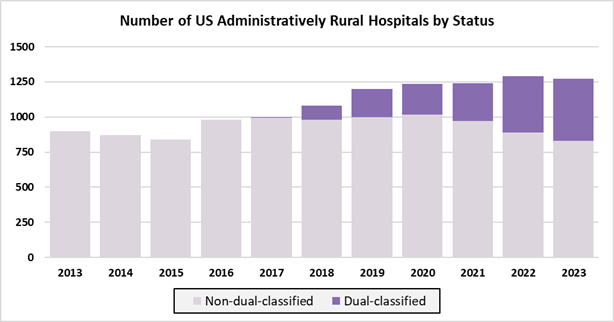
Johns Hopkins and Brown University research shows 400 urban hospitals now claim “rural” status; over a quarter are for-profit, and at least five generate more than $4 billion in annual net patient revenue. These are so-called dual-classified hospitals (those designated as both rural and urban) are uniquely positioned to take advantage of the new Health Transformation program, potentially diverting funds away from smaller hospitals facing genuine financial distress, as outlined in the graphic below.

Rural Healthcare at Risk Navigating the One Big Beautiful Bill Status .jpg

Source: Wang et al., 2025; Sharp Rise in urban hospitals with rural status in Medicare, 2017-23. Raw data retrieved from RAND Hospital Data, Medicare Cost Reports. Note the number of geographically urban hospitals remains stable between 2013 and 2023 (2,543 – 2,258 respectively).

Medicaid Reform: Consequences for Patient and Providers 

The OBBBA also introduces Medicaid work requirements, intended to encourage able-bodied adults to contribute to their healthcare coverage. While designed to promote employment and reduce reliance on public programs, evidence suggests these requirements often cause coverage loss due to administrative and technological challenges rather than unwillingness to work. For example, in Arkansas, over 18,000 people lost coverage within five months of a work requirement pilot, with little measurable increase in employment. Many beneficiaries already had jobs, caregiving responsibilities, or health limitations that made obtaining documentation difficult, and for rural communities, these requirements are especially burdensome. Eligibility checks every six months, technology demands, and verification for seasonal or self-employed work, such as farming, create challenges for both patients and county offices.

Rural hospitals are expected to be further negatively impacted by the new Medicaid work requirements. Coverage loss even among working populations could increase gaps in care and increase uncompensated care for rural hospitals. This decline in Medicaid coverage may reduce reimbursement streams, strain hospital finances, and heighten the risk of service cutbacks and closures, particularly in already vulnerable rural areas. In 40 Medicaid expansion states, federal funding cuts could lead to an average of 19% decline in operating margins, and safety-net facilities could see an average reduction of 56%. Together, these pressures underscore how Medicaid work requirements, while intended to encourage employment, may ultimately destabilize rural healthcare systems and weaken community access to essential medical services.

Looking Forward: Operational and Patient Impacts of the OBBBA on Rural Hospitals

  • Operational Strain on Rural Hospitals: High fixed costs, limited patient volumes, and reliance on Medicaid make rural hospitals financially vulnerable to the new bill
  • Coverage Loss and Access Gaps: Medicaid work requirements may cause individuals, even those employed, to lose coverage, increasing gaps in care and uncompensated services
  • Funding Allocation Challenges: Broad discretion in Rural Health Transformation Fund and urban hospitals claiming rural status may divert resources away from truly at-risk facilities
  • Impact on Care Coordination and Resources: Reduced funding and coverage instability can limit hospitals’ ability to invest in technology, supply chain efficiency, and coordinated care programs
  • Patient & System Impacts: Loss of insurance and resulting delays or forgone care can lead to preventable negative health outcomes, increased emergency department use, and more intensive interventions, while ongoing financial and operational pressures may erode staff morale and weaken the stability of rural healthcare delivery

To navigate the evolving healthcare landscape, medical providers must take proactive steps to improve operational efficiency and financial stability. Hospitals are facing the challenge of doing more with less, as high pharmaceutical, labor, and administrative costs, coupled with looming Medicaid cuts, strain finances. In response, providers are adopting targeted strategies such as better controlling drug utilization, implementing new technologies, minimizing waste, and optimizing supply chain and procurement processes. With the urgency to reduce costs and operate more efficiently at an all-time high, these measures are critical for maintaining both quality of care and organizational resilience, while preparing for anticipated reimbursement reductions and declines in Medicaid enrollment.

Unlocking Savings and Resilience with Pathstone Partners

Pathstone offers rural hospitals cost-effective, hands-on support – bringing deep niche expertise, the agility to respond quickly to shifting challenges, and a partnership approach that tailors solutions to each hospital’s unique community and financial realities. Our boutique size and flexibility allow us to design customized strategies rather than using one-size-fits-all models, drawing on years of direct experience helping rural hospitals navigate financial pressures.

Reach out to Pathstone Partners today to request a no-cost spend assessment and understand how we can help drive financial efficiency for your organization.

Rethinking Purchased Services: Why Benchmarking Alone Won’t Deliver Sustainable Margin Improvement

Healthcare Concept

In healthcare supply chain, benchmarking is often treated as the default starting point for purchased services cost reduction: compare your rates to a national dataset, flag the categories where you’re paying more, and then push vendors to match “market pricing.” On paper, this seems logical, but in practice, benchmarking alone often falls short, especially when it comes to the complexity and variability of purchased services. 

Why Benchmarking Isn’t Enough

Purchased services are rarely “apples to apples” in any industry, and this is especially true in healthcare. Factors such as regional supplier availability, organizational size and scale, and the quality standards or service levels that leadership expects can all significantly influence pricing. A rate that looks “high” compared to a benchmark might actually be completely reasonable once these, and other, variables are factored in. 

We see this challenge play out frequently with our clients. For example, a system that requires quick response times from its clinical engineering services partner, or expanded coverage for rural hospitals, may pay more than peers – and for good reason. These higher costs often reflect intentional leadership choices to protect service quality or operational flexibility. Benchmarking alone doesn’t capture these nuances, and when organizations chase a lower “market rate” without that context, they risk eroding performance or compromising patient care. 

In this same example, clinical engineering spend could be evaluated more holistically. While benchmarking offers a snapshot of the market, a stronger approach might involve optimizing service coverage levels, analyzing technician dispatch patterns, or exploring regional partnerships with other rural entities to preserve quality while improving efficiency.  

The Problem with a Price-First Mindset 

When benchmarking becomes the sole driver of negotiation, the conversation quickly narrows to cost, often at the expense of value. This price-first mindset can obscure bigger opportunities, such as aligning service volumes with actual demand, consolidating fragmented vendors, or updating outdated scopes of work. 

In many of our engagements, we’ve seen previous benchmarking efforts deliver short-term “wins” that erode over time, or worse, create downstream effects that impact clinical outcomes and vendor relationships. These downstream effects can take many forms. For instance, locking in a lower maintenance rate without updating scope can lead to costly repairs for newer equipment. Similarly, reducing linen service frequency to save on fees can cause shortages, emergency deliveries, and staff frustration. Ultimately, focusing solely on price can sacrifice long-term value and operational stability for the illusion of quick savings. 

A Broader Approach to Unlock Value 

Purchased services optimization requires a broader, more strategic approach—one that moves beyond comparing rates to national averages. At Pathstone, we help organizations evaluate a wider set of levers to unlock both financial and operational value. These levers include: 

  • Standardization – Aligning vendors, terms and scopes across facilities to reduce variation and strengthen organizational negotiating leverage within the vendor relationship. 
  • Utilization Management – Identifying overuse or inefficiencies by reviewing actual utilization of goods and services.  
  • Make vs. Buy Decisions – Evaluating when in-house delivery or outsourcing services produce better value and clinical outcomes. 
  • Revenue Opportunities – Identifying services that can be billed or reimbursed, or areas where revenue potential exists.  
  • Strategic Supplier Partnerships – Building relationships that foster innovation and long-term value creation. 

Each lever has trade-offs and requires alignment across stakeholders, but when applied strategically and thoughtfully, they can deliver far greater, and more sustainable, results than benchmarking alone. For a deeper look at when and how to deploy these value levers, see Unlocking Hidden Value in Healthcare Supply Chain: Insights from AHRMM 2025 Spring Summit. 

Putting Context Before Comparison 

Every health system is different. What works for a large academic center may not be right for a community hospital or rural network. That’s why we begin each engagement by understanding of organizational goals and operational realities: 

  • What service levels are truly non-negotiable? 
  • Where are there redundancies or inefficiencies? 
  • Are current suppliers structured to scale with future needs? 

By pairing operational insight with data analysis, we build a custom roadmap that reflects not just “what others are paying,” but what makes sense for your organization. 

Final Thoughts 

Benchmarking is a helpful reference point, but it’s not a strategy. In purchased services, context and alignment matter just as much as cost. 

At Pathstone, we help healthcare organizations identify the right mix of improvement levers, whether that means quick wins or long-term transformation. If benchmarking is the only tool being used, your organization may be overlooking more meaningful and sustainable value. 

Let’s connect to discuss what this could look like for your organization.  

What is Digital Health Technology?

Health Care Financial Consultant Digital Health

The importance of digital health technology

Digital health encompasses the use of various technologies such as such as mobile health (mHealth), health information technology, and telehealth to enhance to overall efficiency between doctors and patients across healthcare systems. The scope of digital health creates opportunities for physicians to gain a holistic view of their patients’ health and for patients to have greater access and ownership to their information.

The importance of digital health technology has increased over time, especially with the COVID-19 pandemic. In addition to increasing access to health information for both providers and patients, digital health also enhances patient-doctor relationships, increases patient disease prevention methods, and creates a shift toward value-based care.

What are the Benefits of Digital Health?

Better Patient-Doctor Relationships

Through digital health, patients can access information about their own health as well as have a stronger relationship with their provider. For example, many hospital systems have digital health portals where patients can message their providers and receive answers back relatively quickly, rather than needing to wait for their next appointment. With digital health portals, patients can also meet with their doctors via video chat, which is especially important during the COVID-19 pandemic. Providers can provide real time updates to their patients regarding lab work and testing all without the patient needing to come into the office.

Improves Access to Information

Using digital health technologies, patients can actively manage their own health and monitor any irregularities that they may experience. Through digital health, patients also have access to information related to the following:

  • Disease prevention
  • Physical therapy
  • Occupational therapy

Having such information at their fingertips allows patients to make more informed decisions about their health.

Promotes Lifestyle Changes Among Patients

The amount of education individuals have access to because of digital health is immense and can lead to lifestyle modifications for patients who may be at risk for common diseases, such as heart disease or diabetes. Physical and occupational therapy can also be achieved through digital health platforms which are paramount to a patient’s recovery.

What Impact Does Digital Health Have on Value-based Care?

Value-based care has been discussed frequently as an alternative to fee for service care. Through digital health technologies, the shift towards value-based care is now being made in the United States.

Value-based care creates a model where providers are rewarded for giving the highest quality care to patients rather than providing care at a lower standard which leads to readmission rates and complications. This type of approach can be used to expand a patient’s care management and ensure that the patient is not suffering because of a lack of quality providers.

Digital health allows for multidisciplinary care management that could be lacking in value-based care. Multidisciplinary care management consists of constant communication between providers, something that digital health has a crucial role in. Digital health technology paired with value-based care gives patients the opportunity to decide for themselves which providers are best equipped to handle their health.

What is the Future of Digital Health?

Digital health is still relatively new in the United States but with continued healthcare services moving towards a digital model, patients will be able to take their care into their own hands. This means that individuals across generations will be more educated about their health and will be able to make informed decisions regarding their own care. Advances in digital health are numerous and the United States will see many more in the future.

As the demand for digital health continues to grow throughout hospitals and healthcare systems, so does the challenges of finding a cost effective solution. At Pathstone Partners, our expert consultants specialize in providing information technology solutions for healthcare systems across several different markets.

From contract negotiations to software rationalization efforts, we take a comprehensive approach to improving outcomes and reducing inefficiencies for health systems. Contact us online to sit down with our experience consultants to learn about our healthcare consulting services how we can help with digital health technology.


Navigating Tariff-Induced Supply Chain Challenges in Healthcare

Healthcare Supplies Tariffs

Key Takeaways

  • Tariffs on imported healthcare products are introducing significant financial strain and operational uncertainty for hospitals, affecting everything from medical supplies and pharmaceuticals to IT infrastructure and construction materials.
  • With limited ability to absorb or offset rising costs, hospitals must take proactive steps to maintain financial stability.
  • Pathstone Partners supports health systems by challenging unjustified supplier price increases, analyzing vendor responses to tariff pressures, and guiding strategic contract negotiations.
  • Pathstone also helps identify and vet alternative suppliers, execute sourcing events, and implement contingency plans to preserve continuity of care and long-term supply chain resilience.

I. Introduction

The U.S. healthcare system depends on a globally integrated supply chain not just for medical equipment and supplies, but for virtually every facet of operations, including pharmaceuticals, IT systems, laboratory instruments, construction materials, purchased services, and more. Historically, healthcare products received strategic exemptions from tariffs — but new policies highlight the potential for tariffs to negatively impact these products. The current administration has implemented, or plans to implement, tariffs on key trading partners. Further, executive orders indicate pharmaceutical tariffs may be implemented within the coming weeks or months. For hospitals and healthcare systems, this policy shift introduces real risks: increased costs, supply delays, and reduced access to lifesaving and life-sustaining products.

II. The Global Supply Chain of Healthcare Products

The U.S. imported $36.7 billion in medical equipment in 20241, with much of its healthcare infrastructure relying on global partnerships. Several countries play critical roles in the healthcare supply chain, and as of June 2025, varying levels of tariffs apply to their exports, according to the Reed Smith Tariff Tracker: 

  • China: Supplied nearly $2.31 billion, primarily for face masks, gloves, and syringes in 20231, and remains the dominant source for active pharmaceutical ingredients (APIs) used in both U.S. and global drug production2. The U.S. currently has a 20% tariff with China, with a 34% tariff set to start 8/12/2510.
  • India: Provides around 40% of the U.S. generic drug supply, which accounts for 90% of prescriptions filled, while relying heavily on Chinese API imports3. A 27% tariff on Indian goods is expected to start 7/9/2510.
  • Mexico: Exported $12 billion in medical equipment, including syringes, diagnostics, and surgical tools1.
  • Canada: A key supplier of prescription medications and raw materials, often offering lower-cost alternatives to U.S.-produced drugs. Canadian and Mexican goods that fall under USMCA rules (fully sourced from USMCA countries) are exempt from tariffs; otherwise, a 25% tariff applies to products from Canada and Mexico10.
  • Other Key Suppliers: Germany, Ireland, and Japan also play important roles — exporting advanced surgical instruments, hosting major medical technology manufacturing hubs, and supplying high-tech diagnostic equipment, respectively1.

This global network ensures innovation, availability, and affordability across the U.S. healthcare landscape — but also introduces potential vulnerabilities in times of geopolitical or logistical disruption.

III. Understanding the Complexity of the U.S. Healthcare Supply Chain & the Influence of Tariffs

Hospitals operate within one of the most intricate supply chains in any industry. Medical products often require highly specialized manufacturing processes and must meet strict FDA and international regulatory standards, which significantly limit sourcing flexibility.

Mark Pascaris, Senior Director and Analytic Lead for Nonprofit Healthcare at Fitch Ratings, cautioned that new tariffs could undermine the modest financial recovery many nonprofit hospitals have achieved in recent years. “This adds yet another headwind for not-for-profit hospitals, which are already navigating post-pandemic pressures, workforce shortages, and persistent inflation,” Pascaris said8.

Given that medical supplies and pharmaceuticals make up 20% or more of hospital operating expenses9, tariffs could affect a broad range of items. Tariffs on critical inputs like diagnostic reagents, telecom hardware, or steel and HVAC components could drive up costs, delay major projects, and disrupt operations. These impacts are far-reaching: a price hike in imported IT equipment may impact cybersecurity readiness, while construction material tariffs could stall facility upgrades or expansions. Even software platforms used in electronic health records may be built on globally sourced technologies, leaving hospitals exposed to cost increases and longer implementation timelines.

However, unlike many other sectors, shifting suppliers or relocating production is neither quick nor simple. It involves considerable time, cost, and logistical coordination — especially in a market where pharmaceuticals remain among the top U.S. import categories4. Even if some manufacturing is reshored to the U.S., Pascaris warned that hospitals may still face “permanently elevated costs and potentially fewer choices.”8

The COVID-19 pandemic underscored these healthcare supply chain challenges, exposing deep vulnerabilities in the global healthcare supply chain and leading to widespread shortages. More recently, the disruption of a single manufacturing plant in North Carolina — which impacted roughly 60% of the nation’s IV solution supply — demonstrated how localized events can have nationwide consequences.

For hospitals, these realities make clear the need for resilient, diversified, and well-managed supply chains to ensure continuity of care and protect against future shocks.

IV. Impact of Tariffs on Healthcare Contracts

Rising tariffs on imported medical goods are adding new financial strain for U.S. hospitals. Increased costs on essential supplies like gloves and syringes — many of which are sourced from China — are difficult to absorb, especially given long-term reimbursement contracts that prevent providers from adjusting prices. The costs of both pharmaceuticals and medical devices are also expected to be impacted by impending tariffs. In particular, complex and varied items such as surgical kits may be affected by the inability for providers to easily switch out kit items.

To manage these pressures, some manufacturers are shifting production to lower-tariff countries such as Malaysia. However, these changes take time and can introduce new sourcing complexities and delays5. Hospitals may experience a 6–12 month delay in feeling the effects of new tariffs due to fixed-price contracts with suppliers, which may shield them from immediate cost increases. However, as these contracts come up for renewal, hospitals are likely to face significant pricing hikes. In some cases, the magnitude of the increase may trigger force majeure clauses, allowing suppliers to renegotiate or exit contracts due to unforeseen economic hardship.

V. Sampling of Supplier Projected Tariff Financial Impacts & Strategic Responses

To better understand how suppliers in the market are adjusting to policy changes, the projected revenue between Q4 2024 and Q1 2025 as well as announced tariff mitigation strategies were compared for key healthcare suppliers.

The chart below illustrates how leading healthcare suppliers have revised their 2025 revenue projections in response to recent U.S. tariff changes. Each bar represents the estimated impact on a specific company, comparing revenue forecasts from Q4 2024 (prior to tariff implementation) with updated estimates from Q1 2025, after companies began adjusting to the new cost landscape.

Companies are also categorized by their tariff response strategy outlined in their Q1 2025 earnings calls: absorbing the added costs, passing them along to hospitals, adopting a mixed strategy, or having low exposure. The strategic decisions made by the suppliers are already influencing hospital budgets, contract terms, and supply chain planning—and will continue to do so heading into the second half of the year. Hospitals are particularly vulnerable based on their utilization of those suppliers who have announced they will pass increased costs onto the health systems.

The most significant projected revenue declines are seen among distributors and medical device manufacturers, reflecting increased import costs on surgical supplies, equipment components, and consumables. Pharmaceutical manufacturers tend to show smaller shifts, often due to more diversified sourcing or the fact that pharmaceutical tariffs have not been formally announced.

Suppliers expected to either fully or partially pass tariff-related costs to hospitals are among those with the steepest projected revenue declines. This suggests that companies pursuing downstream cost-shifting are still facing significant short-term financial pressure and indicates that price increases alone may not be enough to offset the broader impact of tariffs. In contrast, companies absorbing costs or reporting low exposure tend to show smaller revenue shifts, reflecting stronger internal cost controls or more resilient sourcing models that allow them to protect their customers.

Sample 2025 Revenue Impact by Sector and Tariff Response Strategy (4Q24 vs 1Q25)

*Source: Data compiled from Q4 2024 and Q1 2025 earnings reports and press releases from leading healthcare companies operating in the U.S. market. Each bar reflects a single company’s reported revenue projection change.

Hospitals are facing a difficult financial reality: higher supply costs without the ability to raise prices lead directly to shrinking margins and increased pressure on operating income6. Lawmakers have also expressed concern, warning that tariffs on critical medical products could lead to care rationing or treatment delays — outcomes that risk directly impacting patient safety7. Understanding how each supplier is responding to tariffs can help hospitals anticipate upcoming changes in spending, adjust contract strategies, and proactively manage supply chain risk heading into the second half of the year.

VI. Navigating the Path Forward

As tariffs and global supply chain disruptions continue to raise the cost of medical goods, hospitals and health systems face a growing need to balance financial sustainability with uninterrupted, high-quality care delivery. Addressing these pressures requires coordinated, data-driven action — and that’s where Pathstone Partners can help.

  • Push Back on Proposed Price Increases with Existing Suppliers: In the coming months, suppliers under current agreements may propose price increases on existing products or services, using tariffs as justification. Many suppliers already have cushions built into operating margins to better absorb the tariffs, while health system operating margins may be so slim as to not be able to absorb any price increases. Pathstone can push suppliers to act as true partners for health system clients in absorbing some of the tariff pressure.

  • Proactively Manage Supplier Relationships: Based on market review, Pathstone can tell which publicly traded suppliers project significantly decreased revenues or plan to pass the cost of the tariffs onto the hospitals. In conjunction with the hospital team members, Pathstone can provide insight into how a given supplier is managing the situation, informing supplier conversations, business reviews, and contract negotiations.

  • Identify and Vet New Suppliers in Response to Market Shifts: In response to shifting international trade dynamics, new domestic suppliers may enter the market, and existing suppliers may acquire each other or consolidate. New suppliers providing the same product or purchased service may present an opportunity to test the shifting market. Pathstone can conduct RFPs to test the market and understand the value offered by new suppliers.

  • Force Majure: If raw material prices increase considerably, suppliers may be unable to meet contractual pricing requirements, leading to an inability for the supplier to turn a profit. Hospitals may face backorders in these cases. In response, Pathstone can work with clients to quickly implement agreements with new suppliers to minimize patient care disruptions.

  • Evaluate Secondary & Tertiary Suppliers: In response to fluctuations in availability across the market, there may be an opportunity to negotiate and eliminate volume requirements or exclusivity clauses in supplier agreements. If suppliers are unable to meet contractual requirements, hospitals may need to implement agreements with additional suppliers. Pathstone can help health systems balance low prices offered by an exclusive supplier with the need for multiple suppliers to meet demand.

VII. Conclusion

Tariffs are reshaping the economics of healthcare supply chains, especially for hospitals. As costs rise and supply disruptions increase, healthcare systems must act decisively to protect financial health and patient access.

Pathstone Partners helps hospitals move from reactive responses to proactive strategies — building more resilient, cost-effective supply chains without compromising care quality.

Aligning Blood Services Across the Health System

Health Care Financial Consultant 01

A large West coast IDN utilizes 6 different blood banks across the state.

A large West coast IDN utilizes 6 different blood banks across the state. Fees differ across these suppliers and even within the same suppliers, largely due to geographical restraints. In addition, suppliers were increasing their fees across all sites at the beginning of the calendar year. There were many agreements throughout the health system, spread across each region and individual sites, which were not co-terminus.

The health system’s goals included enhancing product quality, improving standardization of current services (delivery times, return policies), and lowering the cost of blood products and services across the system. A Request for Proposal (RFP) was distributed to allow incumbents to bid on their current business, and provided them the opportunity to gain additional regional business. In this RFP, it requested suppliers to agree to contract terms to enhance flexibility and support utilization policies. Multiple rounds of negotiations were conducted prior to selecting finalist(s) for the health system.

Utilizing Pathstone’s laboratory consulting services, the health system conducted an RFP allowed for them to select the best option for each regional facility. Though many regional facilities stayed with their incumbent, it allowed others to select another supplier if the proposal responses more closely aligned with the site’s goals. Suppliers agreed to a co-terminus end date to allow the health system to evaluate as a whole once the contracts expire.

During COVID-19, there has been an extraordinary demand for blood and blood products, yet a shortage of donations. Therefore, blood pricing has largely been dependent on availability and donations.

Why Healthcare Consultants are Valuable for Hospitals

Healthcare Consultant 05

In the intricate world of healthcare, hospitals face the constant challenge of balancing providing exceptional quality patient care, mitigating financial pressures, and matching the pace of medical innovation. Healthcare consultants offer vital support, providing expertise and strategies to navigate financial complexities. Let’s explore why the contributions of a healthcare consulting firm are so valuable to healthcare organizations.

Navigating the Complex Healthcare Landscape

The healthcare industry is dynamic and multifaceted, requiring a deep understanding of regulatory requirements and hospital financial structures. Healthcare consultants bring this specialized knowledge to help navigate these unique challenges. They offer expertise in areas such as:

  • Financial Management: They help hospitals manage costs effectively, freeing up funds to invest in enhanced patient care and innovation. A consultant might also identify an opportunity to increase revenue on a given service line through more appropriate billing and coding, or may point out an alternate supplier with reduced pricing for existing services.
  • Operational Efficiency: Consultants assess current clinical and non-clinical workflows and processes, identifying bottlenecks and inefficiencies that hinder productivity.
  • Technology Integration: Consultants can help hospitals integrate new technologies and optimize use of software modules already owned. They may identify areas to rationalize and eliminate duplicative technology purchases across campuses and departments.
The Imperative of Financial Oversight

Maintaining financial stability is crucial for hospital systems. Healthcare consultants play a key role in ensuring hospitals prevent runaway spend growth. To manage overall system finances, healthcare consultants can work to:

  • Improve Margins: Consultants work to enhance revenue and reduce expenses across categories, leading to improved financial margins. Margins can be improved through negotiating more favorable supplier contracts. Pathstone Partners has improved margins by over $500 million across the combined client portfolio.
  • Reduce Operational Costs: By streamlining processes and optimizing resource allocation, consultants identify areas where internal costs can be reduced. Pathstone Partners, for example, focuses on streamlining operations and lowering operational costs for healthcare providers.
  • Non-Labor Cost Reduction: Consultants also focus on the optimization of non-labor costs through negotiated price reductions with suppliers and reduced utilization of goods and services. Typical target areas for non-labor cost reduction include laboratory supplies, clinical supplies, clinical purchased services, information technology, and pharmacy.
  • Labor Cost Reduction: Consultants provide labor solutions that help with structure optimization, contract labor, premium pay reduction, and overtime reduction.
  • Data-Driven Insights: Consultants use data analysis to track spending, identify cost drivers, and provide actionable insights for financial improvement.
Fostering Innovation in Healthcare

Innovation is essential for healthcare to evolve and adapt to changing needs. Healthcare consultants play a role in driving innovation in the following ways:

  • Implementing New Technologies: Consultants help hospitals identify, select, and implement innovative technology solutions. Target new technologies may automate existing manual tasks and enhance data collection / revenue cycle management. These innovations can enable staff to focus on higher-level responsibilities and ensure clinicians practice at the top of their licensure.
  • Improving Processes: By redesigning workflows and implementing best practices, consultants enable healthcare providers to embrace innovative approaches to patient care and operational management.
  • Introducing New Models of Care: Consultants support the adoption of new models of care delivery that can lead to improved patient outcomes and efficiency.

Areas of Focus Consultants work with a variety of healthcare facilities including:

  • Acute Care Facilities
  • Academic Health Systems
  • Regional Health Systems
  • Pediatric Health Systems
  • Non-Acute Care Facilities
  • Community Health Systems
The Value of an Objective Perspective

Healthcare consultants offer an objective perspective that can be invaluable to executives making critical decisions. They can offer an unbiased opinion on:

    • Process Analysis: They analyze workflows, identifying areas of improvement that might be overlooked by internal staff.
  • Supplier Relationships: Consultants can help hospitals challenge long-standing supplier partnerships and ensure they are receiving maximum value from current supplier contracts.
  • Strategy Development: Consultants work with hospital leadership to develop strategic plans that align with an organization’s goals and values. Their impartial strategic review can set an organization up for the best chance of success.
Learn How Pathstone Partners Can Make an Impact

Healthcare consultants are essential partners for hospital systems, helping them navigate the complexities of healthcare with expertise, objectivity, and a commitment to reducing costs while maintaining quality patient care. By partnering with a healthcare consultant like Pathstone Partners, hospitals can achieve operational excellence and financial stability, and position themselves for a successful future.

Navigating NIH Funding Cuts: How Hospitals Can Adapt and Optimize Costs

The recent developments surrounding NIH indirect funding cuts and blocked grant review meetings have placed hospitals, health systems, and research organizations in a precarious position. With federal funding reductions looming and grant disbursement delays continuing, healthcare organizations must find ways to adapt to maintain research efforts and financial stability.

Current Challenges: NIH Indirect Funding Cuts and Grant Review Delays

The National Institutes of Health (NIH) has proposed capping indirect funding for federal research grants at 15%, significantly reducing funds allocated for essential support costs such as:

  • Facility maintenance (electricity, janitorial services, etc.)
  • Administrative staff salaries
  • Other non-research expenses that keep clinical studies operational

Additionally, a temporary federal block on grant review meetings has delayed NIH’s ability to process new grants, restricting the disbursement of federal funds. While some scientific review meetings have resumed as of February 26, many grant review processes remain frozen, leaving hospitals and research institutions uncertain about future funding.

The Impact on Hospitals and Health Systems

If implemented, the 15% cap on indirect funding would reduce total federal spending on research support costs by over $4 billion. This change will force hospitals and health systems to:

  • Cut spending on research support services or shift funds from other areas
  • Reduce research efforts, leading to furloughs or job cuts
  • Disrupt clinical trials, directly impacting patient care and ongoing research initiatives

For many institutions, this funding shift could mean the difference between continuing life-saving research and having to scale back due to financial constraints.

How Healthcare Organizations Can Mitigate Risks

To navigate these funding reductions, healthcare organizations must prioritize cost-saving strategies across key operational areas. Pathstone Partners recommends the following:

Implement System-Wide Non-Labor Cost Reduction Strategies

  • Evaluate high-spend categories such as Pharmacy, IT, HR, and Purchased Services to identify cost-saving opportunities.

Accelerate Speed to Value (S2V) Initiatives

  • Address suppliers with significant year-over-year (YoY) spend increases and renegotiate contracts with upcoming expirations.
  • Identify under-utilized service agreements and optimize vendor relationships.

Maximize Value Beyond Price Reductions

  • Leverage utilization, standardization, and revenue-enhancement strategies to improve margins.
  • Assess make-or-buy opportunities to optimize resource allocation.

Conduct a Comprehensive Labor Cost Review

  • Analyze staffing patterns and pay structures to identify cost-reduction opportunities.
  • Implement efficient workforce management strategies to minimize unnecessary expenses.
Pathstone Partners: Driving Cost Optimization in Uncertain Times

As hospitals and research organizations brace for potential funding reductions, proactive cost management will be essential to maintaining financial stability and research capabilities. Pathstone Partners specializes in helping healthcare organizations streamline costs, optimize operations, and maximize financial resilience in the face of evolving funding challenges.

Learn more about how Pathstone can support your organization in navigating federal research funding cuts.

IV Fluid Shortage in 2025: Be Prepared with Pathstone

IV Fluid Shortage in 2025
Pathstone Partners’ Strategies for Supporting Hospitals

The recent announcement by the FDA regarding the ongoing shortage of IV fluid containers highlights the significant challenges facing hospitals and healthcare providers. With shortages expected to persist through March 2025, hospitals are grappling with how to meet patient needs amidst constrained supply. At Pathstone Partners, we understand the complexities of such supply chain disruptions and are committed to providing solutions that ensure continuity of care and operational efficiency.

Here’s how Pathstone Partners would help hospitals navigate this critical issue:

Standardization: Exploring Alternative Sourcing Methods

Pathstone’s team would begin by evaluating the hospital’s current sourcing practices. Many hospitals rely on long-standing vendor relationships, but in times of shortages, testing the market can reveal alternative suppliers with available stock.

  • Review existing vendor agreements for flexibility.
  • Obtain quotes from multiple vendors to identify potential alternatives.
  • Navigate contractual constraints and provide guidance if exclusivity clauses are present.
  • By diversifying supply options, hospitals can mitigate the risk of disruptions tied to a single vendor.
Utilization: Reducing Waste and Maximizing Resources

Another critical step is to analyze current IV fluid utilization processes to identify opportunities to minimize waste. For example, unused IV fluids removed from stockrooms and later discarded represent preventable losses.

  • Conduct a process review to identify waste points.
  • Develop staff education programs to optimize IV fluid use.
  • Introduce protocols for more efficient stock rotation and usage tracking.
  • These measures not only conserve valuable supplies but also foster a culture of resource mindfulness among staff.
Strategic Alliances: Partnering with Nearby Health Systems

In times of scarcity, collaboration is key. Pathstone would assist hospitals in exploring partnerships with nearby health systems to share resources and secure more favorable vendor agreements.

  • Identify geographically close health systems open to collaboration.
  • Facilitate the creation of mutual aid agreements to share IV supplies when needed.
  • Explore joint contracts with vendors, leveraging combined purchasing volumes to negotiate better terms.
  • This approach fosters resilience and resource-sharing across the healthcare ecosystem.
Pathstone’s Commitment to Innovation and Support

The IV fluid shortage underscores the importance of adaptive strategies in healthcare supply chain management. At Pathstone Partners, our expertise lies in helping hospitals navigate complex challenges with tailored, actionable solutions. From sourcing alternatives to fostering alliances, we ensure that hospitals remain equipped to meet patient needs without compromising care quality.

The Pathstone team is proud to be a trusted partner for hospitals nationwide, delivering innovative strategies that turn challenges into opportunities. Together, we can create a resilient and efficient healthcare system. If your hospital is navigating supply chain challenges, connect with Pathstone Partners to learn how we can support your team.

The Impact of Data Analytics in Healthcare

Health Care Financial Consultant Cost Reduction 02

Collecting and Organize Data

There is a wealth of information available that healthcare organizations can leverage to streamline efficiency and revolutionize patient care — thanks to an abundance of raw data. The key is to collect and organize this data into an easy-to-interpret format and leverage it to improve current processes and procedures.

In particular, studying healthcare data analytics helps facilities identify where they can cut costs to improve their bottom lines. Keep reading to learn more about the positive financial impact of implementing and studying data analytics in your healthcare organization.

What Is Data Analytics in Healthcare?

Data analytics in healthcare is the act of compiling, categorizing and interpreting previously disorganized data to learn from and use it to optimize a healthcare organization’s operations and services. In short, it’s studying data-derived insights to improve operational efficiency and patient care. The most notable uses of data analytics in healthcare include:

  • Forecasting real-time trends.
  • Automating processes and procedures.
  • Making data accessible and easier to understand.
  • Revolutionizing patient care.
  • Driving healthcare innovation.
  • Advancing medical research.

Studying data-derived intelligence is helpful for every aspect of running a patient-centered, profitable healthcare facility. For example, healthcare practitioners can use data to spot trends that could cause re-admissions or assist in disease prevention. Plus, analyzing data could surge a facility’s bottom line by streamlining its operational efforts, like anticipating supply or staffing needs.

The Different Types of Healthcare Data Analytics

To study data, healthcare organizations first need special software to collect it and systems to compile it into easy-to-digest information. It’s also helpful to understand the different kinds of data analytics. Depending on an organization’s goals or pain points, one type of data analytics might be more beneficial to gather and study than another.

There are four main types of healthcare data analytics organizations can leverage:
  • Descriptive: Descriptive analytics is historical data that organizations can analyze to decipher whether their current systems and practices are efficient.
  • Predictive: Predictive analytics uses forecasting techniques like predictive modeling to make educated guesses about what might happen.
  • Diagnostic: Diagnostic analytics aims to diagnose what happened and why — or the factors contributing to particular outcomes —  using historical data.
  • Prescriptive: Prescriptive analytics leverages machine learning and historical data to make predictions helpful for introducing optimal practices.
Ways Data Analytics Can Reduce Healthcare Costs

There are several ways utilizing data analytics improves patient care and boosts an organization’s bottom line. Keep reading to learn how data analytics reduces healthcare costs.

Accessible Medical Records

Going paperless with digital medical records or Electronic Healthcare Records (EHR) boasts significant cost savings for healthcare facilities. EHRs are also superb for collecting real-time clinical, administrative and diagnostic information healthcare professionals can use to anticipate a patient’s needs and further personalize their care.

For example, EHRs can prompt practitioners and administrative staff to schedule reminders and medication orders or note patient preferences and trigger warnings, thus improving the patient experience. Plus, an EHR helps streamline time-consuming clerical tasks, like data access and entry. It has the potential to reduce errors and make information accessible from multiple facilities.

Smooth, Efficient Supply Chains

Supply chain breakdowns result in lost time and revenue, but they also affect patient care. Organizations can use data analytics to assess and anticipate their supply needs. Doing so optimizes inventory management for a smoother and better patient experience.

For example, data analytics highlights trends like shipment delays and order-to-delivery time frames. Analyzing supply chain disruptions or issues reduces the likelihood of overspending and streamlines inventory management, resulting in smarter spending and prompt care.

Enhanced Security

Unfortunately, data breaches and fraud claims are all too common in healthcare. Cybercriminals are known to target healthcare organizations for sensitive information. Cyberattacks were especially prevalent during the COVID-19 pandemic when healthcare professionals felt overwhelmed and burnt out.

The effects of data breaches are exceptionally costly for hospitals and other healthcare practices. To tackle cyberattacks and data breaches head-on, healthcare facilities can study data analytics to analyze the status quo and identify unexpected changes. For example, pinpointing suspicious events like surges in network traffic might indicate fraudulent activity.

Staffing Needs

An understaffed healthcare facility affects professionals and their patients. Thus, it’s crucial that an organization can anticipate staffing needs — especially during seasons when staffing might naturally fluctuate, like the holidays or flu season.

However, it’s tricky to distinguish between overstaffing and understaffing. Overstaffing leads to overspending and understaffing negatively impacts patient care. Studying historical staffing data and seeing how the seasons and other commonplace events affect it helps organizations hire and schedule the appropriate number of staff members during times of critical need.

Learn to Use Healthcare Data Analytics to Improve Your Facility

Are you ready to use healthcare data analytics to improve your organization but don’t know where to begin? Consult our experts at Pathstone Partners! We’re a leading healthcare management consulting firm that collaborates with healthcare facilities to improve their financial and operational efficiency.

It’s our ultimate mission to empower practitioners to provide the best patient experience possible. Contact us today to learn more about how data analytics can transform the way you run your healthcare organization and provide patient care.

Importance of Environmental Services (EVS) in Healthcare

Health Care Financial Consultant Environmental Services in Healthcare

What Are Environmental Services in Healthcare?

A key challenge that health systems face involves healing patients in an environment in which many illnesses are highly transmissible. Environmental services (EVS), which is defined as all cleaning services that take place in healthcare settings, performs the vital service of protecting patients, visitors, and staff from infectious pathogens. While proper cleaning of clinical spaces has a direct impact on patient health outcomes, the perception of clean in non-clinical areas significantly influences patient satisfaction scores.

Why Are Environmental Services Important in Hospitals?

Patient outcomes are directly influenced by the performance of EVS while in the hospital. Hospital-acquired infections (HAIs) affect roughly 1 in 31 hospital patients and 1 in 43 nursing home residents in the United States, their impact becoming more pronounced with the rise of antibiotic-resistant bacteria.

Further, HAIs represent a significant expense to hospitals at over $9.8B annually. HAIs represent a considerable challenge to EVS systems, as not all pathogens can be eliminated using the same cleaners and methods. C. diff, a common hospital-acquired bacterium, forms spores on surfaces and cannot be sterilized with bleach alone. In order for EVS to minimize the impact of HAIs on the health system, EVS staff must understand the nuances of cleaning patient care areas relative to non-hospital janitorial work.

Environmental services personnel are integral to the success of the health systems they serve because of the effect their work has on patient satisfaction. The Hospital Consumer Assessment of Healthcare Providers and Systems (HCAHPS) survey is issued to recent hospital patients nationwide as a means to evaluate and compare hospital performance across systems. Included in HCAHPS are questions related to the quality of the hospital environment, which includes how patients perceive the cleanliness of the hospital. As a result, EVS must ensure that both clinical and non-clinical areas are pathogen free to prevent HAI transmission and appear clean to the naked eye to bolster HCAHPS scores.

What is the Role of EVS Staff in Hospitals?

Efficiency and employee education are key factors that influence the success of an EVS department. EVS staff must be efficient in cleaning rooms post discharge to make room for new admissions, but too much emphasis placed on turnaround time may result in insufficient disinfection.

Further, employees must understand their role in combating HAIs not only for the benefit of patient outcomes and satisfaction, but also to mitigate their financial impact on the system. A successful EVS department is an essential component of a successful health system, as EVS plays a key role in helping hospitals achieve their primary objective of treating patients and preventing infection.